 Central General Practice
 Repulse Bay
 Clearwater Bay
 BodyWorX Clinic
 Central Specialist Clinic
 MindWorX Clinic
 Family Clinic
 OT&P Annerley Midwives Clinic
 WellWorX Clinic
.png?width=120&name=Tim%20Trodd%20(1).png)
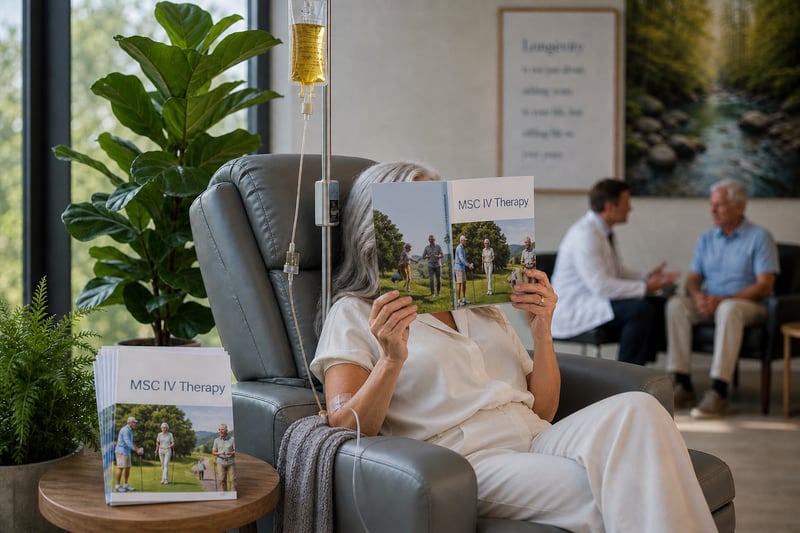
Can Intravenous Stem Cells Slow Ageing? The Science Behind MSC Therapy
For decades, the idea of reversing biological ageing belonged to science fiction. Today, it is the subject of rigorous clinical trials, regulatory approvals, and a rapidly growing body of peer-reviewed evidence. At the centre of this revolution are Mesenchymal Stem Cells (MSCs), and the case for their role in healthy longevity is becoming harder to ignore.
What Are MSCs and Why Do They Matter for Ageing?
Mesenchymal Stem Cells are multipotent stromal cells capable of differentiating into bone, muscle, cartilage, and neural tissue. But their most powerful anti-ageing action is not what they become; it is what they secrete. MSCs release a rich cocktail of growth factors, anti-inflammatory cytokines, and extracellular vesicles that repair damaged tissue, suppress chronic inflammation, and reset the immune system.[1]
Ageing is now understood to be driven by four converging processes: stem cell exhaustion, cellular senescence, mitochondrial dysfunction, and, perhaps most critically, a state of chronic, low-grade inflammation known as inflammaging.[2] Inflammaging silently destroys muscle fibres, stiffens blood vessels, impairs cognitive function, and suppresses immune defences, increasing the risk of age-related diseases.[2] A landmark review published in Nature Reviews Cardiology established that elevated TNF-α, IL-6, and CRP levels are independent predictors of mortality in frail older adults.[3]
MSCs are the most potent known biological anti-inflammatory agents. Intravenous infusion delivers them systemically[4], where they home to sites of injury and inflammation, extinguish inflammaging at its source, and replenish the body's depleted regenerative reserve.[1]
The Mechanism: How IV MSCs Work Against Ageing
The anti-ageing action of IV MSCs operates through five distinct but interconnected pathways:
- Inflammaging suppression. MSCs polarise macrophages from pro-inflammatory M1 to anti-inflammatory M2 phenotypes, suppress activated T cells, and induce regulatory T cells (Tregs), generating sustained reductions in TNF-α, IL-6, and IL-17.[5]
- Stem cell pool replenishment. Endogenous stem cell numbers and function decline substantially with advancing age. Exogenous MSC infusion provides a biological "reset," restoring tissue regeneration capacity that has been lost to age-related exhaustion.[6]
- Paracrine secretome. The majority of MSC benefit is not from direct engraftment but from their secretome, releasing VEGF, HGF, IGF-1, and anti-apoptotic signals that promote cell survival and tissue repair.[7] MSC-derived extracellular vesicles (exosomes) have been shown to reduce senescence and extend healthspan in animal models.[7]
- Mitochondrial transfer. MSCs transfer functional mitochondria to damaged cells via tunnelling nanotubes, restoring cellular bioenergetics in aged tissues, a mechanism particularly relevant to age-related muscle and cardiac decline.[7]
- Immune system rejuvenation. Aged immune systems are characterised by accumulation of exhausted CD8+ T cells and dysfunctional B cells. MSC therapies may help restore immune cell function and reduce pro-inflammatory through proliferative capacity and immunomodulatory properties.[8]
The Clinical Evidence: What Trials Actually Show
The most advanced IV MSC anti-ageing programme is Lomecel-B (laromestrocel), developed by Longeveron using allogeneic bone marrow MSCs from young, healthy donors.
The landmark CRATUS Phase II randomised, double-blind, placebo-controlled trial (Tompkins et al., Journal of Gerontology, 2017) enrolled 30 frail elderly patients. At 6 months, the 100 million cell dose group demonstrated a +64 metre improvement on the 6-minute walk test, exceeding the 47–49 metre threshold considered a "substantial meaningful change", alongside significantly reduced TNF-α and senescent CD8+ T cell populations, with no serious adverse events in any participant.[9]
The subsequent Phase IIb trial (NCT03169231, 148 participants aged 70–85), reported in Cell Stem Cell, demonstrated a statistically significant dose-response effect: a +63 metre gain in walking distance at the 200 million cell dose at 9 months post-infusion, accompanied by dose-dependent reductions in soluble Tie2, consistent with pro-vascular activity.[10]
A separate Phase I/II RCT of umbilical cord-derived MSCs (Zhu et al., Stem Cell Research & Therapy, 2024) in 30 frail adults aged 60–80 showed significant reductions in TNF-α (p=0.034) and IL-17 (p=0.033) versus placebo at 6 months, with improvements in grip strength and physical performance.[6]
Infusion Intervals: How Often Should MSCs Be Given?
The clinical trial literature does not yet support a single universally agreed protocol, but the following framework emerges from published data:
- Initial infusion: A single IV infusion of 100–200 million cells has been evaluated in phase II ageing-frailty trials[9,10]
- Repeat dosing interval: Most protocols repeat infusions every 6–12 months, reflecting the observed duration of benefit in clinical trials, the Lomecel-B programme uses 6-monthly assessments as response checkpoints[10]
- Frequency rationale: MSCs are cleared from the circulation within 24–48 hours (pulmonary first-pass effect), but their paracrine and immunomodulatory effects persist for months via downstream biological changes[11]
- Long-term maintenance: Annual infusions are considered in clinical longevity programmes, with dose and interval adjusted based on biomarker response (TNF-α, IL-6, physical performance metrics)
China: The Global Leader in MSC Regulation and Scale
While the United States and Europe remain in Phase II/III clinical trial phases, China has moved decisively to regulatory approval and large-scale clinical deployment.
As of November 2024, China's National Medical Products Administration (NMPA) had accepted over 130 clinical trial applications for stem cell drugs, the majority MSC-based.[12] In 2025, the NMPA conditionally approved Amimestrocel Injection, an umbilical cord MSC product, making it the first MSC therapeutic to receive national regulatory sanction anywhere in the world for steroid-refractory acute GVHD.[13]
China's regulatory advantage stems from several factors: a dedicated dual regulatory framework for regenerative medicine; a 2015 landmark publication of the country's first randomised, double-blind, placebo-controlled MSC trial[12]; and a national policy commitment to positioning China as the global leader in cellular therapeutics. One of the largest anti-ageing UC-MSC clinical trial launched in June 2026, enrolling participants across multiple centres in China.[14]
Crucially, China has standardised GMP-grade UC-MSC manufacturing at scale[15], drawing on Wharton's Jelly of the umbilical cord as a non-invasive, ethically uncontroversial, and biologically superior cell source. Chinese regulators have also pioneered conditional approval pathways that allow monitored clinical use while Phase III data matures, a model that other jurisdictions are now watching closely.
What This Means for Clinical Practice
IV MSC therapy sits at the frontier of evidence-based longevity medicine. The biological rationale is mechanistically coherent, the Phase I/II safety profile is consistently reassuring, and the Phase IIb functional data is the strongest human longevity evidence yet published. The field's primary evidence gap, large Phase III RCTs, is now being actively closed, with China leading the way.
For clinicians practising in Hong Kong and the Asia-Pacific region, the regulatory developments in mainland China, combined with the improving clinical evidence base, place IV MSC therapy in the category of "investigational with compelling signals", appropriate for carefully selected patients, within structured clinical programmes that systematically track biomarker and functional outcomes, with fully informed consent.
The next five years will determine whether IV MSCs become the first approved systemic anti-ageing intervention in modern medicine. The evidence suggests the answer may well be yes.
.png?width=200&name=Tim%20Trodd%20(1).png)
Dr Tim Trodd
- MBBS (London)
- DCH (London)
- DRCOG (UK)
- MRCGP (UK)
- FHKAM (Family Medicine)


-4.png?width=768&name=%5BMKT%5DWebsite%20Blog%20Photo%20(23)-4.png)
-3.png?width=768&name=%5BMKT%5DWebsite%20Blog%20Photo%20(19)-3.png)
-2.png?width=768&name=%5BMKT%5DWebsite%20Blog%20Photo%20(15)-2.png)
-2.png?width=768&name=%5BMKT%5DWebsite%20Blog%20Photo%20(14)-2.png)
-4.png?width=768&name=%5BMKT%5DWebsite%20Blog%20Photo%20(13)-4.png)
-1.png?width=768&name=%5BMKT%5DWebsite%20Blog%20Photo%20(12)-1.png)
-3.png?width=768&name=%5BMKT%5DWebsite%20Blog%20Photo%20(11)-3.png)
![[Part 3] The Hidden Hormonal Control Centre: Your Gut and Testosterone Featured image](https://www.otandp.com/hs-fs/hubfs/%5BMKT%5DWebsite%20Blog%20Photo%20%288%29-2.png?width=768&name=%5BMKT%5DWebsite%20Blog%20Photo%20%288%29-2.png)
![[Part 2] Do You Have Low Testosterone? Tests & Treatment Explained Featured image](https://www.otandp.com/hs-fs/hubfs/%5BMKT%5DWebsite%20Blog%20Photo%20(7)-4.png?width=768&name=%5BMKT%5DWebsite%20Blog%20Photo%20(7)-4.png)
![[Part 1] The Silent Decline in Men's Testosterone and Sperm Counts Featured image](https://www.otandp.com/hs-fs/hubfs/%5BMKT%5DWebsite%20Blog%20Photo%20(6)-2.png?width=768&name=%5BMKT%5DWebsite%20Blog%20Photo%20(6)-2.png)




















































References
-
Han, S. and Kim, S.-W. (2025). 'Systemic aging delay and anti-aging therapy using allogeneic stem cells.' Korean Journal of Family Medicine, 46(3), pp. 127 to 136. Available at: https://doi.org/10.4082/kjfm.25.0080.
-
Li, X., Li, C., Zhang, W., Wang, Y., Qian, P. and Huang, H. (2023). 'Inflammation and aging: signaling pathways and intervention therapies.' Signal Transduction and Targeted Therapy, 8(1), p. 239. Available at: https://doi.org/10.1038/s41392-023-01502-8.
-
Ferrucci, L. and Fabbri, E. (2018). 'Inflammageing: chronic inflammation in ageing, cardiovascular disease, and frailty.' Nature Reviews Cardiology, 15(9), pp. 505 to 522. Available at: https://doi.org/10.1038/s41569-018-0064-2.
-
Garay, R.P. (2023). 'Recent clinical trials with stem cells to slow or reverse normal aging processes.' Frontiers in Aging, 4, p. 1148926. Available at: https://doi.org/10.3389/fragi.2023.1148926.
-
Yang, R., Gao, H., Chen, L., Fang, N., Chen, H., Song, G., Yu, L., Zhang, Q. and Zhang, T. (2020). 'Effect of peripheral blood-derived mesenchymal stem cells on macrophage polarization and Th17/Treg balance in vitro.' Regenerative Therapy, 14, pp. 275 to 283. Available at: https://doi.org/10.1016/j.reth.2020.03.008.
-
Zhu, Y., Huang, C., Zheng, L., Li, Q., Ge, J., Geng, S., Zhai, M., Chen, X., Yuan, H., Li, Y., Jia, W., Sun, K., Li, Y., Ye, T., Zhao, Z., Liu, H., Liu, Z. and Jiang, H. (2024). 'Safety and efficacy of umbilical cord tissue-derived mesenchymal stem cells in the treatment of patients with aging frailty: a phase I/II randomized, double-blind, placebo-controlled study.' Stem Cell Research & Therapy, 15, p. 122. Available at: https://doi.org/10.1186/s13287-024-03707-2.
-
Patel, J.C., Shukla, M. and Shukla, M. (2025). 'From bench to bedside: translating mesenchymal stem cell therapies through preclinical and clinical evidence.' Frontiers in Bioengineering and Biotechnology, 13, p. 1639439. Available at: https://doi.org/10.3389/fbioe.2025.1639439.
-
Yeo, G.E.C., Ng, M.H., Nordin, F.B. and Law, J.X. (2021). 'Potential of mesenchymal stem cells in the rejuvenation of the aging immune system.' International Journal of Molecular Sciences, 22(11), p. 5749. Available at: https://doi.org/10.3390/ijms22115749.
-
Tompkins, B.A., DiFede, D.L., Khan, A., Landin, A.M., Schulman, I.H., Pujol, M.V., Heldman, A.W., Miki, R., Goldschmidt-Clermont, P.J., Goldstein, B.J., Mushtaq, M., Levis-Dusseau, S., Byrnes, J.J., Lowery, M., Natsumeda, M., Delgado, C., Saltzman, R., Vidro-Casiano, M., Da Fonseca, M., Golpanian, S., Premer, C., Medina, A., Valasaki, K., Florea, V., Anderson, E., El-Khorazaty, J., Mendizabal, A., Green, G., Oliva, A.A. and Hare, J.M. (2017). 'Allogeneic mesenchymal stem cells ameliorate aging frailty: a phase II randomized, double-blind, placebo-controlled clinical trial.' The Journals of Gerontology: Series A, 72(11), pp. 1513 to 1522. Available at: https://doi.org/10.1093/gerona/glx137.
-
Ruiz, J.G., Oliva, A.A., Ramdas, K.N., Javier, J., Rosen, J., Perry, R., Blanco, A., Ylisastigui, P., Walston, J., Arai, H., Volpi, E., Newman, A.B., Varnado, B., McClain-Moss, L., Naioti, E., Mehranfard, D., Gincel, D., Wang, C., Mintzer, M.J., Danisi, J., Green, G.A., Botbyl, J., Zainul, Z., Rash, B.G. and Hare, J.M. (2026). 'Randomized phase 2b dose-escalation trial of stem cell therapy with laromestrocel for aging frailty.' Cell Stem Cell, 33, pp. 1 to 12. Available at: https://doi.org/10.1016/j.stem.2026.01.017.
-
Ferrini, E., Stellari, F.F., Franceschi, V., Macchi, F., Russo, L., Murgia, A., Grisendi, G., Villetti, G., Dominici, M. and Donofrio, G. (2021). 'Persistency of mesenchymal stromal/stem cells in lungs.' Frontiers in Cell and Developmental Biology, 9, p. 709225. Available at: https://doi.org/10.3389/fcell.2021.709225.
-
Chen, S., Zhang, L., Ren, Y., Bai, X., Wei, X., Chai, M., Cui, S., Zhao, X. and Deng, H. (2026). 'Clinical translational research on stem cell products: prospects and challenges.' Signal Transduction and Targeted Therapy, 11, p. 178. Available at: https://doi.org/10.1038/s41392-026-02582-y.
- CCFDIE. (2025). 'Amimestrocel Injection Approved with Conditions for Marketing by China NMPA.' National Medical Products Administration. Available at: https://english.nmpa.gov.cn/2025-06/11/c_1101546.htm [Accessed: 24 July 2026].
- Longevity.Technology. (2026). 'China launches first large-scale stem cell antiaging trial.' Available at: https://longevity.technology/news/china-launches-first-large-scale-stem-cell-antiaging-trial/ [Accessed: 24 July 2026].
- National Medical Products Administration Drug Evaluation Centre (CDE). (2023). '关于发布《人源性干细胞及其衍生细胞治疗产品临床试验技术指导原则(试行)》的通告.' Available at: https://www.cde.org.cn/main/news/viewInfoCommon/f82a0fee1e625a1a3834a93cee3836c7 [Accessed: 24 July 2026].