 Central General Practice
 Repulse Bay
 Clearwater Bay
 BodyWorX Clinic
 Central Specialist Clinic
 MindWorX Clinic
 Family Clinic
 OT&P Annerley Midwives Clinic
 WellWorX Clinic
.png?width=120&name=Tim%20Trodd%20(1).png)
-4.png?width=800&name=%5BMKT%5DWebsite%20Blog%20Photo%20(7)-4.png)
How Do We Test for Low Testosterone?
If you are experiencing symptoms like fatigue, reduced libido, loss of muscle mass, mood changes, poor concentration, increased body fat, or sleep disturbance, it is worth investigating your testosterone levels properly.
The Endocrine Society and the American Urological Association (AUA) are clear: diagnosis of testosterone deficiency (hypogonadism) requires both symptoms AND consistently low laboratory values.[1][2] A low number alone does not make a diagnosis, and treatment should not be initiated on biochemistry alone.
What Testing Should Include
A comprehensive functional medicine assessment goes well beyond a single testosterone level:
- Total testosterone: Measured on two separate early morning samples (testosterone peaks between 8–10am), with levels below 300 ng/dL considered the threshold for investigation[2][3]
- Free testosterone: The biologically active fraction, critical when Sex Hormone Binding Globulin (SHBG) is elevated
- SHBG (Sex Hormone Binding Globulin): High SHBG lowers free testosterone even when total testosterone appears normal[4]
- LH and FSH: To distinguish between primary (testicular) and secondary (pituitary/hypothalamic) hypogonadism[1]
- Prolactin: Elevated levels can suppress the entire hormonal axis[4]
- Oestradiol: Excess conversion of testosterone to oestrogen is common in men with obesity or high toxic load
- Thyroid function: Thyroid disorders directly impair testosterone production
- Cortisol: Chronic stress-driven cortisol elevation suppresses the HPG axis
- Zinc, Vitamin D, magnesium: Deficiencies in these nutrients directly impair testosterone synthesis[5]
- HbA1c and fasting insulin: Insulin resistance is a powerful suppressor of testosterone[6]
For men concerned about fertility, a semen analysis remains the cornerstone investigation, assessing sperm concentration, motility, morphology, and total count. The AUA/ASRM guidelines identify this as the critical first step in male infertility evaluation.[7]
Treatment: From Root Cause to Resolution
The functional medicine approach begins with identifying exactly what is driving the problem for each individual, and addressing those root causes first, before reaching for pharmaceutical interventions.
First-Line: Lifestyle Optimisation
Evidence strongly supports lifestyle modification as the foundation of treatment and, in many men, is sufficient to restore testosterone levels without pharmaceutical intervention:[8]
- Weight loss: Even modest weight reduction produces significant increases in testosterone
- Resistance training: The single most powerful lifestyle tool for raising testosterone naturally[9]
- Sleep optimisation: 7 to 9 hours of quality sleep per night is non-negotiable for hormonal health
- Stress reduction: Mindfulness, breathing techniques, and reducing cortisol drivers
- Alcohol reduction: Even moderate consumption chronically suppresses testosterone[10]
- Diet: Mediterranean-style, rich in zinc (oysters, red meat, pumpkin seeds), selenium, Vitamin D, and healthy fats
Targeted Nutritional Support
Specific deficiencies should be corrected with precision. Evidence-supported supplements for male reproductive health include:
- Zinc: Randomised controlled trials show zinc supplementation improves sperm count, motility, and morphology[11]
- Antioxidants (CoQ10, Vitamin E, NAC, L-carnitine): Reduce oxidative stress on sperm DNA and improve motility and vitality[11][12][13]
- Vitamin D: Deficiency is strongly associated with low testosterone
- Omega-3 fatty acids: Shown to improve sperm quality parameters[13]
Reducing Toxic Load
Given the role of endocrine disruptors, reducing exposure is a meaningful clinical intervention:
- Switch to glass, stainless steel, or ceramic for food and drink storage
- Filter drinking water to remove BPA, heavy metals, and microplastics
- Avoid microwaving food in plastic containers. Heat dramatically increases BPA leaching
- Choose organic produce where possible to reduce pesticide exposure
- Avoid synthetic fragrances in personal care products (common source of phthalates)
- Choose natural personal care products free from parabens and xenoestrogens
Pharmaceutical Options
When lifestyle and nutritional interventions are insufficient, clinical options include:
1. Testosterone Replacement Therapy (TRT)
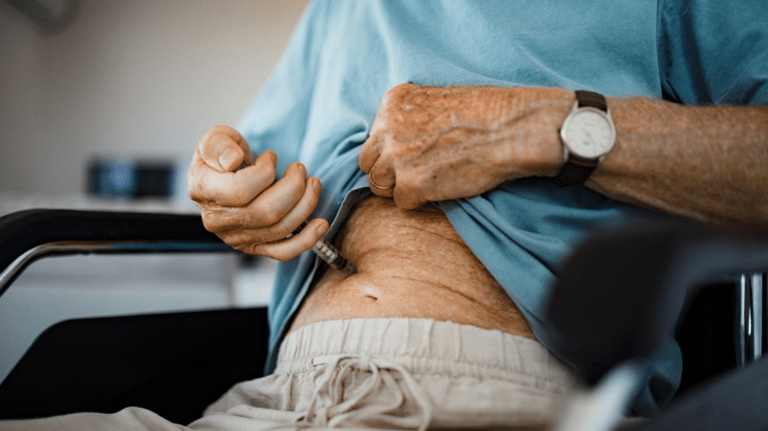
The primary treatment for confirmed hypogonadism. Available as injections, transdermal gels, and even a nasal gel. TRT improves Testosterone levels and therefore libido, energy, mood, bone density, and muscle mass.[14] However, a critical caveat: TRT suppresses the body's own sperm production and is contraindicated in men wishing to preserve fertility. After a period of time the natural production of Testosterone will have been suppressed to a point where it will not recover once the TRT is stopped.
2. Varicocele repair
A a varicocele (enlarged scrotal veins) is one of the most common and treatable causes of male infertility. Microsurgical repair improves sperm parameters and testosterone levels, and may allow natural conception or reduce the intensity of assisted reproduction required.[7]
3. hCG (human chorionic gonadotrophin)
Stimulates testicular testosterone production while maintaining testicular size and sperm production, useful for men on TRT who wish to preserve fertility.[14]
4. Clomiphene Citrate (Clomid)
A selective oestrogen receptor modulator (SERM) that stimulates the pituitary to produce more LH and FSH, raising the body's own testosterone production while preserving fertility. This is the preferred option for men who wish to optimise testosterone without compromising sperm production.[14]
Can a Sauna Help Remove BPA?
This is an increasingly relevant question, and the answer is: yes, with important caveats.
The key distinction is this: sweating can help eliminate BPA and phthalates (chemical compounds), but cannot remove intact microplastic particles, which are physical particles too large for sweat glands to excrete.[15][16]
A landmark study, the Blood, Urine and Sweat (BUS) Study, analysed BPA concentrations in blood, urine, and sweat in 20 participants. The finding was striking: BPA was detected in the sweat of 16 out of 20 participants, including some individuals who had no detectable BPA in either their blood or urine.[15] This suggests that sweat may access tissue-level BPA stores that are not efficiently cleared by the kidneys or liver, and that sweat analysis may actually be more accurate than blood or urine testing for assessing total body burden of BPA.[15]
A separate study found that MEHP, a toxic phthalate metabolite, was present in sweat at concentrations more than twice as high as in urine, leading researchers to conclude that induced sweating is a meaningful pathway for phthalate elimination.[16]
Infrared sauna may be particularly effective in this regard. Because infrared heat penetrates 1.5 to 2 inches into tissue, reaching the fat cells where BPA and phthalates preferentially accumulate, it may be more effective at mobilising these stored toxins than traditional convection-based saunas or exercise alone.[17]
That said, it is important to be realistic: the quantities eliminated per session are real but modest. Sauna use reduces toxic load; it does not eliminate it. The most effective strategy combines sauna use with consistent reduction of ongoing exposure. Eliminate the source first, then support elimination through sweating.
Practical sauna guidance:
- 20 to 30 minute sessions produce 500ml to 1 litre of sweat[18]
- Drink 500 to 700ml of water before and after each session to prevent dehydration
- Regular sessions (2 to 4 per week) are more effective than occasional intensive use
- Infrared saunas operating at 60°C for 15 to 30 minutes represent the most studied protocol[18]

.png?width=200&name=Tim%20Trodd%20(1).png)
Dr Tim Trodd
- MBBS (London)
- DCH (London)
- DRCOG (UK)
- MRCGP (UK)
- FHKAM (Family Medicine)


-4.png?width=768&name=%5BMKT%5DWebsite%20Blog%20Photo%20(23)-4.png)
-3.png?width=768&name=%5BMKT%5DWebsite%20Blog%20Photo%20(19)-3.png)

-2.png?width=768&name=%5BMKT%5DWebsite%20Blog%20Photo%20(15)-2.png)
-2.png?width=768&name=%5BMKT%5DWebsite%20Blog%20Photo%20(14)-2.png)
-4.png?width=768&name=%5BMKT%5DWebsite%20Blog%20Photo%20(13)-4.png)
-1.png?width=768&name=%5BMKT%5DWebsite%20Blog%20Photo%20(12)-1.png)
-3.png?width=768&name=%5BMKT%5DWebsite%20Blog%20Photo%20(11)-3.png)
![[Part 3] The Hidden Hormonal Control Centre: Your Gut and Testosterone Featured image](https://www.otandp.com/hs-fs/hubfs/%5BMKT%5DWebsite%20Blog%20Photo%20%288%29-2.png?width=768&name=%5BMKT%5DWebsite%20Blog%20Photo%20%288%29-2.png)
![[Part 2] Do You Have Low Testosterone? Tests & Treatment Explained Featured image](https://www.otandp.com/hs-fs/hubfs/%5BMKT%5DWebsite%20Blog%20Photo%20(7)-4.png?width=768&name=%5BMKT%5DWebsite%20Blog%20Photo%20(7)-4.png)
![[Part 1] The Silent Decline in Men's Testosterone and Sperm Counts Featured image](https://www.otandp.com/hs-fs/hubfs/%5BMKT%5DWebsite%20Blog%20Photo%20(6)-2.png?width=768&name=%5BMKT%5DWebsite%20Blog%20Photo%20(6)-2.png)








































References
- Bhasin, S., Brito, J.P., Cunningham, G.R., Hayes, F.J., Hodis, H.N., Matsumoto, A.M., Snyder, P.J., Swerdloff, R.S., Wu, F.C. and Yialamas, M.A. (2018). 'Testosterone therapy in men with hypogonadism: an Endocrine Society clinical practice guideline.' The Journal of Clinical Endocrinology & Metabolism, 103(5), pp. 1715 to 1744. Available at: https://academic.oup.com/jcem/article/103/5/1715/4939465.
- Mulhall JP, Trost LW, Brannigan RE et al. (2018). Evaluation and management of testosterone deficiency: AUA guideline. J Urol. 200: 423. Available at: https://www.auanet.org/guidelines-and-quality/guidelines/testosterone-deficiency-guideline [Accessed: 17 June 2026].
- Sizar, O., Schwartz, J. and Gunta, S.S. (2024). 'Male hypogonadism.' StatPearls. Available at: https://www.ncbi.nlm.nih.gov/books/NBK532933 [Accessed: 17 June 2026].
- Al-Sharefi, A. and Quinton, R. (2020). 'Current national and international guidelines for the management of male hypogonadism: helping clinicians to navigate variation in diagnostic criteria and treatment recommendations.' Endocrinology and Metabolism (Seoul), 35(3), pp. 526 to 540. Available at: https://pmc.ncbi.nlm.nih.gov/articles/PMC7520594.
- Kyle C (2025). 'A functional medicine approach to low testosterone in men.' STAT Wellness. Available at: https://www.statwellness.com/a-functional-medicine-approach-to-low-testosterone-in-men [Accessed: 17 June 2026].
- Miller, C., Madden-Doyle, L., Jayasena, C., McIlroy, M., Sherlock, M. and O'Reilly, M.W. (2024). 'Mechanisms in endocrinology: hypogonadism and metabolic health in men, novel insights into pathophysiology.' European Journal of Endocrinology, 191(6), R1 to R17. Available at: https://academic.oup.com/ejendo/article/191/6/R1/7794745.
- Brannigan, R.E., Hermanson, L., Kaczmarek, J., Kim, S.K., Kirkby, E. and Tanrikut, C. (2024) ‘Updates to male infertility: AUA/ASRM guideline’, Journal of Urology, published online 15 August. doi:10.1097/JU.0000000000004180.
- Grossmann, M. and Matsumoto, A.M. (2017). 'A perspective on middle-aged and older men with functional hypogonadism: focus on holistic management.' The Journal of Clinical Endocrinology & Metabolism, 102(3), pp. 1067 to 1075. Available at: https://pmc.ncbi.nlm.nih.gov/articles/PMC5477803.
- Chen, Z., Hong, Z., Wang, S., Qiu, J., Wang, Q., Zeng, Y. and Weng, H. (2023). 'Effectiveness of non-pharmaceutical intervention on sperm quality: a systematic review and network meta-analysis.' Aging, 15(10), pp. 4253 to 4268. Available at: https://www.aging-us.com/article/204727/text.
- Valida Health. (2025). 'What does alcohol do to your testosterone levels?' Valida Health. Available at: https://validahealth.dk/en/blogs/news-room/hvad-gor-alkohol-ved-dit-testosteronniveau [Accessed: 17 June 2026].
- Torres-Arce E, Vizmanos B, Babio N, Márquez-Sandoval F, Salas-Huetos A.(2021). 'Dietary antioxidants in the treatment of male infertility: counteracting oxidative stress.' Biology (Basel)., 10(3), p. 241. Available at: https://pmc.ncbi.nlm.nih.gov/articles/PMC8003818.
- Bocu, K., Boeri, L., Metin Mahmutoglu, A. and Vogiatzi, P. (2025). 'Can lifestyle changes significantly improve male fertility: a narrative review?' Arab Journal of Urology, 23(3), pp. 190 to 200. Available at: https://pmc.ncbi.nlm.nih.gov/articles/PMC12308861.
- Bebb, R. (2011). 'Testosterone deficiency: practical guidelines for diagnosis and treatment.' BCMJ, 53(10), pp. 474 to 479. Available at: https://bcmj.org/articles/testosterone-deficiency-practical-guidelines-diagnosis-and-treatment [Accessed: 17 June 2026].
- Krzastek, S.C. and Smith, R.P. (2020). 'Non-testosterone management of male hypogonadism: an examination of the existing literature.' Translational Andrology and Urology, 9(Suppl 2), S160 to S170. Available at: https://tau.amegroups.org/article/view/33647/html.
- Genuis, S.J., Beesoon, S., Birkholz, D. and Lobo, R.A. (2012). 'Human excretion of bisphenol A: blood, urine, and sweat (BUS) study.' Journal of Environmental and Public Health, 2012, article 185731. Available at: https://pmc.ncbi.nlm.nih.gov/articles/PMC3255175.
- Genuis, S.J., Beesoon, S., Lobo, R.A. and Birkholz, D. (2012). 'Human elimination of phthalate compounds: blood, urine, and sweat (BUS) study.' The Scientific World Journal, 2012, article 615068. Available at: https://doi.org/10.1100/2012/615068.
- Peak Saunas. (2026). 'Sauna heavy metal detox: how sweating eliminates toxic metals.' Available at: https://peaksaunas.com/blogs/wellness/sauna-heavy-metal-detox [Accessed: 17 June 2026].
- Hussain, J. and Cohen, M. (2018). 'Clinical effects of regular dry sauna bathing: a systematic review.' Evidence-Based Complementary and Alternative Medicine, 2018, article 1857413. Available at: https://pmc.ncbi.nlm.nih.gov/articles/PMC5941775.


-1.png?length=500&name=%5BMKT%5DWebsite%20Blog%20Photo%20(40)-1.png)