 Central General Practice
 Repulse Bay
 Clearwater Bay
 BodyWorX Clinic
 Central Specialist Clinic
 MindWorX Clinic
 Family Clinic
 OT&P Annerley Midwives Clinic
 WellWorX Clinic
.png?width=120&name=Tim%20Trodd%20(1).png)
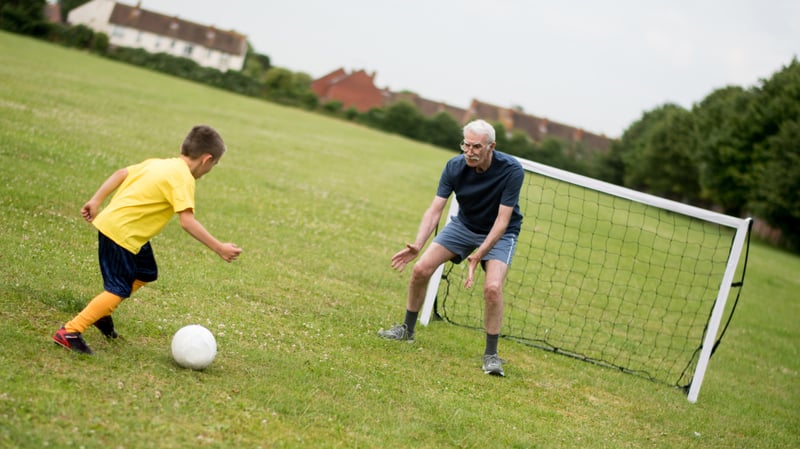
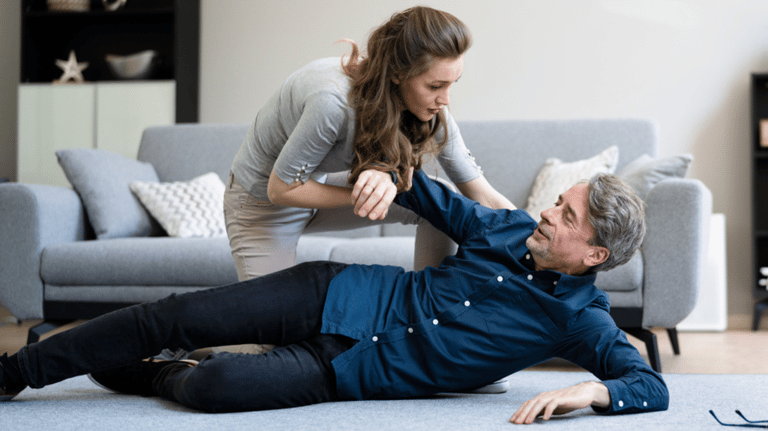
Balance is a fundamental component of healthy ageing and long‑term independence. It is maintained by three main sensory systems working together: proprioceptive (body position sense), vestibular (inner ear), and visual (ocular). These systems all decline with age, but at different rates. As a result, older adults rely more heavily on vision and are more prone to imbalance and falls.
Balance is not only essential for preventing falls but is increasingly recognised as a key marker of healthy ageing and longevity. Falls are a leading cause of injury, disability, and death in older adults worldwide, making balance training a critical part of any effective healthspan and longevity programme.
How Balance Systems Change With Age
The human balance system depends on constant communication between the body, sensory organs, and the brain. Ageing affects each of these systems differently, reducing postural control and increasing instability and fall risk over time.
Proprioception and Ageing: Declining Body Awareness
Proprioception is the sense of joint position and movement that comes from muscles, tendons, and joints. It allows the brain to know where the limbs are without relying on vision.
With age, there is a gradual loss of peripheral sensory receptors alongside slower nerve conduction. This reduces joint position sense and makes fine balance control less accurate, particularly in the ankles and feet, which play a critical role in fall prevention.
Vestibular System Decline: Inner Ear Changes and Balance Loss
The vestibular system, located in the inner ear, detects head movement and orientation relative to gravity. It helps stabilise gaze and posture during movement.
Age-related degeneration leads to loss of hair cells and nerve fibres within the vestibular organs and nerve. This weakens responses to head movement and increases dizziness, unsteadiness, and overall fall risk in older adults.
Visual System and Balance: Why Vision Becomes More Important With Age
Vision provides essential information about the environment and body movement relative to surroundings. It plays a major role in maintaining upright posture and guiding safe walking.
With ageing, common visual conditions, such as cataracts, macular degeneration, and reduced contrast sensitivity, degrade visual input. As a result, older adults sway more when their eyes are closed and are particularly vulnerable in poor lighting or on uneven surfaces.
Sensory Integration and Ageing: Why Balance Reactions Slow Down
The brain constantly integrates proprioceptive, vestibular, and visual signals to make anticipatory and compensatory adjustments to posture.
Ageing reduces the efficiency of this sensory integration and slows postural reactions. Older adults therefore commonly experience:
-
Increased postural sway
-
Greater joint stiffness
-
Less effective automatic stepping responses when balance is disturbed
As vision becomes more dominant, combined challenges, such as dim lighting and uneven ground, markedly increase instability and fall risk. One particularly high‑risk scenario is night‑time trips to the toilet, when darkness and drowsiness further elevate the risk of falls.
Maintaining Balance With Age: Training to Prevent Falls and Support Longevity
The key message is that the body’s balance systems are trainable at any age. Regular, structured work on strength, balance, proprioception, vision, and inner‑ear function can significantly reduce fall risk and support long‑term mobility and independence.
Important: Always seek professional advice before beginning a new exercise programme, particularly strength training, to reduce injury risk and ensure exercises are appropriate and effective.
Evidence‑Based Exercises to Improve Balance and Reduce Fall Risk
Strength Training for Balance and Stability
Strength training for the legs and core (such as squats, sit‑to‑stands, step‑ups, calf raises, and light resistance exercises) performed two to three times per week improves hip, knee, and ankle strength. Improved muscular strength enhances proprioception and allows faster, more controlled balance reactions.
Balance Training to Prevent Falls
Balance‑specific exercises such as feet‑together stance, semi‑tandem and tandem stance, and single‑leg stance (with support as needed) are highly effective. Progressions include reducing hand support and adding gentle head turns. Training at moderate to high difficulty two to three times per week for at least six weeks has been shown to significantly reduce falls in older adults.
Proprioceptive Training for Joint Awareness
Proprioceptive drills, including controlled weight shifts, multidirectional stepping, and standing on slightly compliant surfaces while holding support, improve joint position sense at the ankles, knees, and hips.
Vestibular‑Focused Exercises for Stability
Vestibular exercises such as slow head turns while standing or walking while keeping the eyes fixed on a target help the nervous system make better use of inner‑ear input and recover more effectively from unexpected balance disturbances.
Conclusion: Balance Training Is Essential for Healthy Ageing and Longevity
Balance relies on a complex integration of sensory inputs that naturally decline with age. However, structured and progressive balance training can slow this decline, and in many cases improve balance capacity.
Incorporating balance, strength, proprioception, and vestibular exercises into a regular routine is one of the most effective strategies for preventing falls, maintaining independence, and supporting healthy ageing and longevity.
.png?width=200&name=Tim%20Trodd%20(1).png)
Dr Tim Trodd
- MBBS (London)
- DCH (London)
- DRCOG (UK)
- MRCGP (UK)
- FHKAM (Family Medicine)
-4.png?width=768&name=%5BMKT%5DWebsite%20Blog%20Photo%20(23)-4.png)
-3.png?width=768&name=%5BMKT%5DWebsite%20Blog%20Photo%20(19)-3.png)
-2.png?width=768&name=%5BMKT%5DWebsite%20Blog%20Photo%20(15)-2.png)
-2.png?width=768&name=%5BMKT%5DWebsite%20Blog%20Photo%20(14)-2.png)
-4.png?width=768&name=%5BMKT%5DWebsite%20Blog%20Photo%20(13)-4.png)
-1.png?width=768&name=%5BMKT%5DWebsite%20Blog%20Photo%20(12)-1.png)
-3.png?width=768&name=%5BMKT%5DWebsite%20Blog%20Photo%20(11)-3.png)
![[Part 3] The Hidden Hormonal Control Centre: Your Gut and Testosterone Featured image](https://www.otandp.com/hs-fs/hubfs/%5BMKT%5DWebsite%20Blog%20Photo%20%288%29-2.png?width=768&name=%5BMKT%5DWebsite%20Blog%20Photo%20%288%29-2.png)
![[Part 2] Do You Have Low Testosterone? Tests & Treatment Explained Featured image](https://www.otandp.com/hs-fs/hubfs/%5BMKT%5DWebsite%20Blog%20Photo%20(7)-4.png?width=768&name=%5BMKT%5DWebsite%20Blog%20Photo%20(7)-4.png)
![[Part 1] The Silent Decline in Men's Testosterone and Sperm Counts Featured image](https://www.otandp.com/hs-fs/hubfs/%5BMKT%5DWebsite%20Blog%20Photo%20(6)-2.png?width=768&name=%5BMKT%5DWebsite%20Blog%20Photo%20(6)-2.png)


























References
-
Ferlinc, A., Fabiani, E., Velnar, T. and Gradisnik, L. (2019) 'The importance and role of proprioception in the elderly: a short review', Materia Socio-Medica, 31(3), pp. 219–221. doi:10.5455/msm.2019.31.219-221.
-
Owsley, C. (2011) 'Aging and vision', Vision Research, 51(13), pp. 1610–1622. doi:10.1016/j.visres.2010.10.020.
-
Thomas, E., Battaglia, G., Patti, A., Brusa, J., Leonardi, V., Palma, A. and Bellafiore, M. (2019) 'Physical activity programs for balance and fall prevention in elderly: a systematic review', Medicine, 98(27), e16218. doi:10.1097/MD.0000000000016218.
-
World Health Organization (2021) Falls. Available at: https://www.who.int/news-room/fact-sheets/detail/falls (Accessed: 10 August 2026).
- Zalewski, C.K. (2015) 'Aging of the human vestibular system', Seminars in Hearing, 36(3), pp. 175–196. doi:10.1055/s-0035-1555120.


.png?length=500&name=%5BMKT%5DWebsite%20Blog%20Photo%20(42).png)