
 Central General Practice
 Repulse Bay
 Clearwater Bay
 BodyWorX Clinic
 Central Specialist Clinic
 MindWorX Clinic
 Family Clinic
 OT&P Annerley Midwives Clinic
 WellWorX Clinic
.png?width=120&name=Tim%20Trodd%20(1).png)
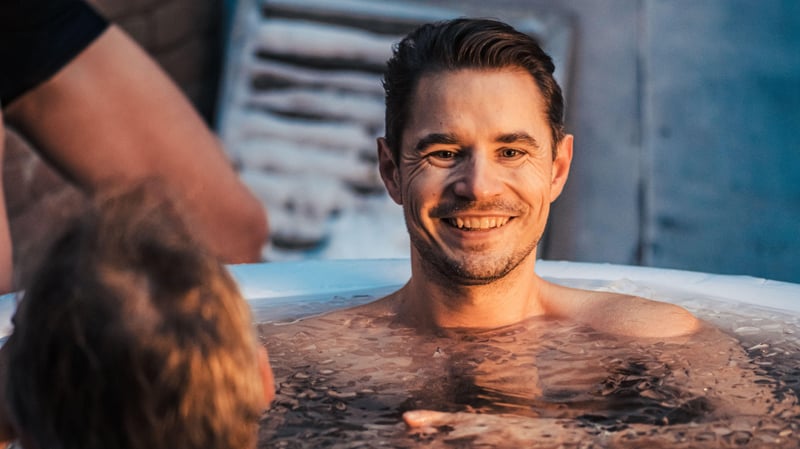
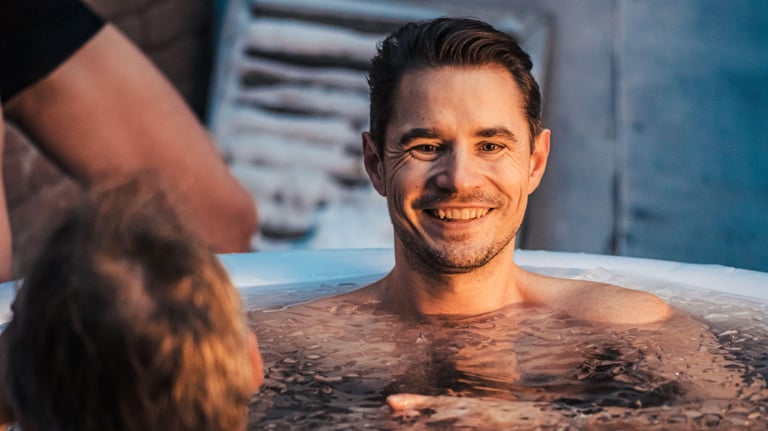
Cold plunge therapy is best understood as a hormetic stressor, meaning it creates a short term stress that stimulates positive biological adaptation. Within a healthspan and longevity programme, cold exposure may support healthy ageing systems. However, it does not yet have the same level of direct reverse ageing biomarker data seen in interventions such as HBOT telomere studies.
Key Anti-Ageing Effects of Cold Plunge Therapy
Lower Chronic Inflammation and Inflammaging
Regular cold exposure, such as winter swimming or structured cold water therapy, has been associated with reduced pro inflammatory cytokines and increased anti inflammatory cytokines. This shift may help slow inflammaging, the chronic low grade inflammation linked to ageing and age related disease.
Improved Metabolic Health and Insulin Sensitivity
Cold exposure activates brown adipose tissue and stimulates non shivering thermogenesis. These mechanisms can improve insulin sensitivity, glucose regulation, triglyceride levels and adiponectin, all of which are linked to reduced long term cardiometabolic risk and improved longevity outcomes.
Cardiovascular Health and Lipid Profile Improvements
Long term cold water swimmers have been shown to display improved lipid profiles, including higher HDL relative to LDL, lower homocysteine levels and enhanced circulation. These cardiovascular benefits may contribute to reduced cardiovascular disease risk, a major determinant of lifespan.
Mitochondrial Function and Autophagy Activation
Cold exposure acts as a hormetic stimulus that may upregulate mitochondrial biogenesis and strengthen antioxidant defences. It may also enhance autophagy, the body’s cellular clean up process. Research suggests that even a one week cold immersion protocol can activate cellular repair pathways in humans.
Brain Health, Mood and Stress Resilience
Cold plunges acutely increase norepinephrine and dopamine levels. They are associated with improved mood and greater stress resilience. These neurological and psychological benefits may indirectly support cognitive health and healthy ageing.
What This Means for Anti-Ageing and Longevity
A 2025 review on cold exposure and longevity concluded that cold therapy may reduce chronic inflammation, improve metabolic health and enhance antioxidant defences. Animal and ecological data suggest cooler environments may support longevity. However, long term human lifespan data remain limited.
Current expert consensus positions cold plunge therapy as a complementary lifestyle intervention that may extend healthspan, including mobility, cardiometabolic health and mental wellbeing. It is not currently considered a proven method for extending lifespan or directly reversing biological ageing markers such as telomere length.
Caveats and Practical Considerations for Cold Exposure
-
Benefits appear to require a sufficient dose, meaning adequate time in cold water to approach shivering and repeated exposure to trigger deeper physiological adaptation. Very brief, comfortable dips may produce smaller systemic effects.
-
Cold immersion immediately after resistance training may blunt muscle hypertrophy. For those prioritising muscle gain, it is advisable to schedule cold plunges several hours later or on rest days.
-
Individuals with cardiovascular disease, arrhythmias, uncontrolled hypertension or other chronic conditions should consult a clinician before beginning cold plunge therapy. Cold exposure is a significant acute stressor despite its potential long term benefits.
-
Not everyone responds well to cold immersion. Excessive exposure may elevate stress and cortisol levels in some individuals.

.png?width=200&name=Tim%20Trodd%20(1).png)
Dr Tim Trodd
- MBBS (London)
- DCH (London)
- DRCOG (UK)
- MRCGP (UK)
- FHKAM (Family Medicine)


-4.png?width=768&name=%5BMKT%5DWebsite%20Blog%20Photo%20(23)-4.png)
-3.png?width=768&name=%5BMKT%5DWebsite%20Blog%20Photo%20(19)-3.png)
-2.png?width=768&name=%5BMKT%5DWebsite%20Blog%20Photo%20(15)-2.png)
-2.png?width=768&name=%5BMKT%5DWebsite%20Blog%20Photo%20(14)-2.png)
-4.png?width=768&name=%5BMKT%5DWebsite%20Blog%20Photo%20(13)-4.png)
-1.png?width=768&name=%5BMKT%5DWebsite%20Blog%20Photo%20(12)-1.png)
-3.png?width=768&name=%5BMKT%5DWebsite%20Blog%20Photo%20(11)-3.png)
![[Part 3] The Hidden Hormonal Control Centre: Your Gut and Testosterone Featured image](https://www.otandp.com/hs-fs/hubfs/%5BMKT%5DWebsite%20Blog%20Photo%20%288%29-2.png?width=768&name=%5BMKT%5DWebsite%20Blog%20Photo%20%288%29-2.png)
![[Part 2] Do You Have Low Testosterone? Tests & Treatment Explained Featured image](https://www.otandp.com/hs-fs/hubfs/%5BMKT%5DWebsite%20Blog%20Photo%20(7)-4.png?width=768&name=%5BMKT%5DWebsite%20Blog%20Photo%20(7)-4.png)
![[Part 1] The Silent Decline in Men's Testosterone and Sperm Counts Featured image](https://www.otandp.com/hs-fs/hubfs/%5BMKT%5DWebsite%20Blog%20Photo%20(6)-2.png?width=768&name=%5BMKT%5DWebsite%20Blog%20Photo%20(6)-2.png)


























References
-
Boulares, A., Jdidi, H. and Douzi, W. (2025) ‘Cold and longevity: Can cold exposure counteract aging?’, Life Sciences, 364, 123431. doi: 10.1016/j.lfs.2025.123431.
-
Šrámek, P., Šimečková, M., Janský, L., Šavlíková, J. and Vybíral, S. (2000) ‘Human physiological responses to immersion into water of different temperatures’, European Journal of Applied Physiology, 81, pp. 436–442. Available at: https://doi.org/10.1007/s004210050065.
-
van der Lans, A.A.J.J., Hoeks, J., Brans, B., Vijgen, G.H.E.J., Visser, M.G.W., Vosselman, M.J., Hansen, J., Jörgensen, J.A., Wu, J., Mottaghy, F.M., Schrauwen, P. and van Marken Lichtenbelt, W.D. (2013) ‘Cold acclimation recruits human brown adipose tissue and increases non-shivering thermogenesis’, Journal of Clinical Investigation, 123(8), pp. 3395–3403. doi: 10.1172/JCI68993.
-
Tipton, M.J., Collier, N., Massey, H., Corbett, J. and Harper, M. (2017) ‘Cold water immersion: kill or cure?’, Experimental Physiology, 102(11), pp. 1335–1355. doi: 10.1113/EP086283.
- Roberts, L.A., Raastad, T., Markworth, J.F., Figueiredo, V.C., Egner, I.M., Shield, A., Cameron-Smith, D., Coombes, J.S. and Peake, J.M. (2015) ‘Post-exercise cold water immersion attenuates acute anabolic signalling and long-term adaptations in muscle to strength training’, The Journal of Physiology, 593(18), pp. 4285–4301. Available at: https://doi.org/10.1113/JP270570.
-
López-Ojeda, W. and Hurley, R.A. (2024) ‘Cold-Water Immersion: Neurohormesis and Possible Implications for Clinical Neurosciences’, Journal of Neuropsychiatry and Clinical Neurosciences, 36(3), p. A4–177. doi:10.1176/appi.neuropsych.20240053. (pubmed.ncbi.nlm.nih.gov)


-3.png?length=500&name=%5BMKT%5DWebsite%20Blog%20Photo%20(31)-3.png)
