 Central General Practice
 Repulse Bay
 Clearwater Bay
 BodyWorX Clinic
 Central Specialist Clinic
 MindWorX Clinic
 Family Clinic
 OT&P Annerley Midwives Clinic
 WellWorX Clinic
.png?width=120&name=Tim%20Trodd%20(1).png)

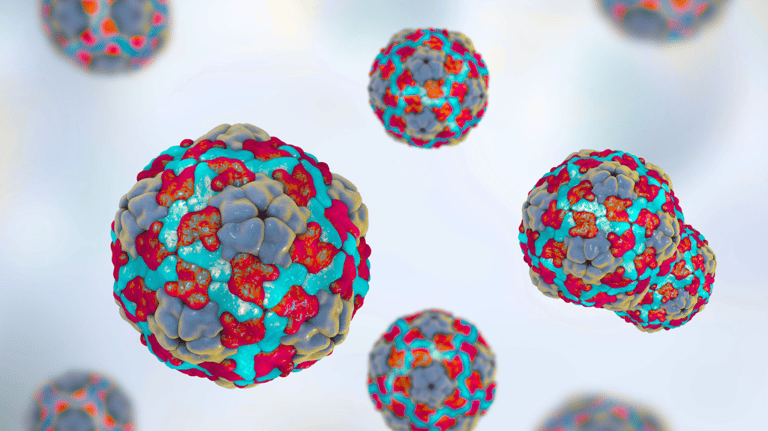
The scientific paper “Accelerated Brain Ageing During the COVID-19 Pandemic” reviews evidence that COVID-19 can hasten biological processes linked to brain ageing by driving chronic inflammation, neuroinflammation, and immune system dysfunction. This increase in these factors raises the risks for cognitive decline and neurodegenerative diseases in both older and younger adults [1].
Key Findings on COVID-19's Impact on Brain Ageing
COVID-19's Impact: The virus’s effects extend beyond acute illness; persistent symptoms (long COVID) involve cognitive, neurological, and systemic changes reminiscent of ageing. Approximately 10–30% of non-hospitalised and up to 70% of hospitalised survivors exhibit long COVID symptoms.
Mechanisms of Brain Ageing: Key pathways include chronic inflammation ('inflammaging'), immune cell senescence (immunosenescence), and disruptions in neuroimmune communication. All of these are implicated in typical brain and immune ageing and are amplified by COVID-19.
Vulnerable Groups at Risk: Older adults are particularly vulnerable due to pre-existing age-related neuroimmune decline. However, accelerated brain ageing and cognitive difficulties are also observed in younger individuals with long COVID.
Markers of Cognitive Decline: Changes in blood markers such as neurofilament light chain (NFL) and glial fibrillary acidic protein (GFAP)—both linked to neural injury—remain elevated post-COVID and correlate with persistent cognitive deficits and brain changes equivalent to decades of ageing.
Additional Factors Influencing Brain Ageing: Variant-specific effects (e.g., the Alpha variant causes more severe thymic atrophy) and factors such as gut microbiome disruption, autoantibody production, and the reactivation of latent viruses (e.g., EBV, CMV) may further exacerbate immunosenescence and brain ageing.
Clinical Implications for Managing Long COVID
Interventions to Mitigate Effects: Targeting chronic inflammation with anti-inflammatory drugs, neuroprotective treatments, immunomodulation, and lifestyle changes (diet and exercise) may help mitigate accelerated ageing and long-term neurological sequelae in COVID-19 survivors.
Public Health Considerations: Recognising COVID-19 as a risk factor for accelerated 'biological' brain ageing highlights the need for ongoing support, monitoring, and tailored interventions for both the elderly and younger individuals affected by long COVID.
COVID-19 can prompt lasting biological changes that lead to accelerated brain ageing through overlapping mechanisms of inflammation and immune dysfunction. This poses significant challenges for long-term brain health and requires multifaceted intervention strategies.

References
- Davis, H.E., McCorkell, L., Vogel, J.M. and Topol, E.J. (2023) 'Long COVID: major findings, mechanisms and recommendations', Nature Reviews Microbiology, 21(3), pp. 133–146. Available at: https://www.nature.com/articles/s41579-022-00846-2
- Douaud, G., Lee, S., Alfaro-Almagro, F., Arthofer, C., Wang, C., McCarthy, P. et al. (2022) 'SARS-CoV-2 is associated with changes in brain structure in UK Biobank', Nature, 604(7907), pp. 697–707. Available at: https://www.nature.com/articles/s41586-022-04569-5
- Kanberg, N., Ashton, N.J., Andersson, L.-M., Yilmaz, A., Lindh, M., Nilsson, S. et al. (2020) 'Neurochemical evidence of astrocytic and neuronal injury commonly found in COVID-19', Neurology, 95(12), pp. e1754–e1759. Available at: https://www.neurology.org/doi/10.1212/WNL.0000000000010111
- Mohammadi-Nejad, A.-R. et al. (2025) 'Accelerated brain ageing during the COVID-19 pandemic', Nature Communications, 16. [Article no. to confirm.] doi:10.1038/s41467-025-61033-4. Available at: https://www.nature.com/articles/s41467-025-61033-4
.png?width=200&name=Tim%20Trodd%20(1).png)


-4.png?width=768&name=%5BMKT%5DWebsite%20Blog%20Photo%20(23)-4.png)
-3.png?width=768&name=%5BMKT%5DWebsite%20Blog%20Photo%20(19)-3.png)

-2.png?width=768&name=%5BMKT%5DWebsite%20Blog%20Photo%20(15)-2.png)
-2.png?width=768&name=%5BMKT%5DWebsite%20Blog%20Photo%20(14)-2.png)
-4.png?width=768&name=%5BMKT%5DWebsite%20Blog%20Photo%20(13)-4.png)
-1.png?width=768&name=%5BMKT%5DWebsite%20Blog%20Photo%20(12)-1.png)
-3.png?width=768&name=%5BMKT%5DWebsite%20Blog%20Photo%20(11)-3.png)
![[Part 3] The Hidden Hormonal Control Centre: Your Gut and Testosterone Featured image](https://www.otandp.com/hs-fs/hubfs/%5BMKT%5DWebsite%20Blog%20Photo%20%288%29-2.png?width=768&name=%5BMKT%5DWebsite%20Blog%20Photo%20%288%29-2.png)
![[Part 2] Do You Have Low Testosterone? Tests & Treatment Explained Featured image](https://www.otandp.com/hs-fs/hubfs/%5BMKT%5DWebsite%20Blog%20Photo%20(7)-4.png?width=768&name=%5BMKT%5DWebsite%20Blog%20Photo%20(7)-4.png)
![[Part 1] The Silent Decline in Men's Testosterone and Sperm Counts Featured image](https://www.otandp.com/hs-fs/hubfs/%5BMKT%5DWebsite%20Blog%20Photo%20(6)-2.png?width=768&name=%5BMKT%5DWebsite%20Blog%20Photo%20(6)-2.png)