 Central General Practice
 Repulse Bay
 Clearwater Bay
 BodyWorX Clinic
 Central Specialist Clinic
 MindWorX Clinic
 Family Clinic
 OT&P Annerley Midwives Clinic
 WellWorX Clinic
.png?width=120&name=Tim%20Trodd%20(1).png)
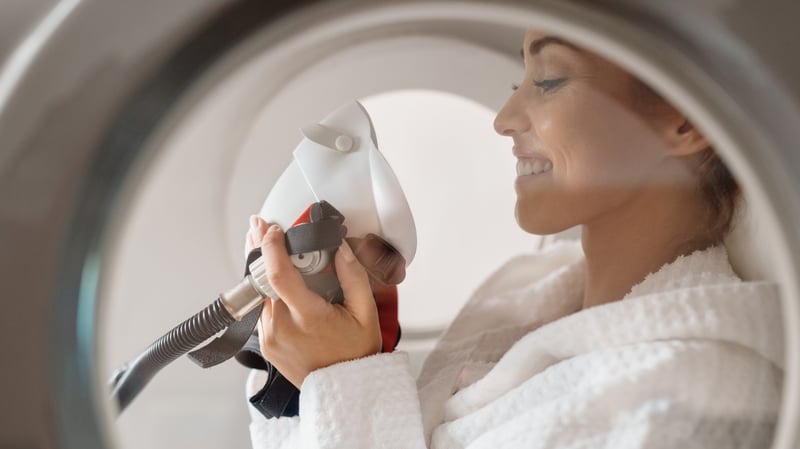
I am often asked about Hyperbaric Oxygen Therapy (HBOT) and its benefits from a healthspan and longevity perspective. Below is a clear explanation of how HBOT works and why it is increasingly included in anti-ageing and longevity programmes.
How Hyperbaric Oxygen Therapy Works
Oxygen is carried in our blood by haemoglobin. Simply increasing the concentration of oxygen that we breathe will not significantly increase the amount transported in the bloodstream. However, if we increase both atmospheric pressure and oxygen concentration, tissue oxygen levels rise significantly. This is the physiological basis of HBOT.
Under increased pressure, oxygen dissolves more effectively into plasma and penetrates tissues at higher concentrations, supporting cellular repair and regeneration.
HBOT in Medical and Anti-Ageing Settings
HBOT has several established medical applications. The chambers used in hospitals are large and can achieve pressures of up to three times normal atmospheric pressure.
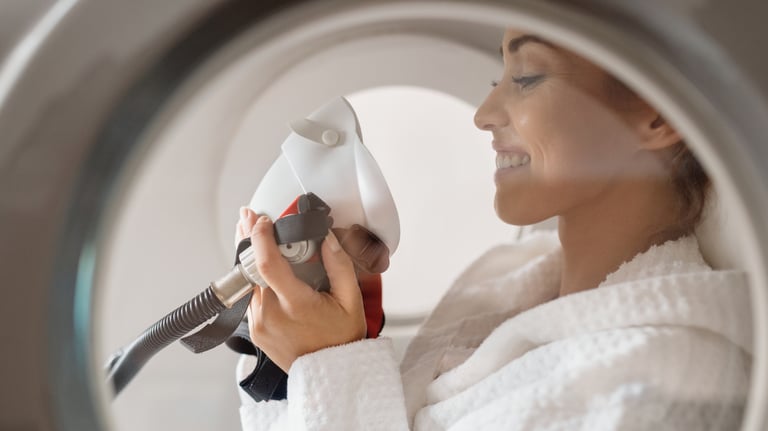
Chambers used for anti-ageing and longevity optimisation are typically smaller, designed for single or dual occupancy, and operate at 2 atmospheres absolute, or 2.0 ATA. This level is commonly used in longevity-focused HBOT protocols.
HBOT for Anti-Ageing and Biomarker Improvement
According to Bryan Johnson, HBOT ranks as one of the highest value anti-ageing therapies within his longevity programme. He had been struggling to find interventions that meaningfully improved his biomarkers, and HBOT achieved that.
His programme of 60 HBOT sessions reported:
-
Telomere length, a key biomarker of ageing, improved to levels comparable to that of a 12-year-old
-
A 300 percent increase in VEGF, supporting new blood vessel formation
-
Increases of 250 percent and 290 percent in short-chain fatty acids and n-butyrate respectively, important microbiome markers
-
Complete elimination of gut metabolic imbalances
-
A 28.6 percent reduction in a dementia-related biomarker
-
Improved muscle oxygenation
-
Marked improvements in whole body skin health
-
Scientific Evidence Supporting HBOT for Longevity
These outcomes align with findings in the scientific literature. A study at the Shai Efrati and Sagol Center demonstrated more than 20 percent telomere lengthening and a 10 to 37 percent reduction in senescent immune cells following 60 HBOT sessions over approximately 90 days at 2.0 ATA, with 90 minute sessions breathing 100 percent oxygen and intermittent breaks.
Longevity-focused HBOT clinicians continue to regard 60 sessions as the gold standard anti-ageing protocol. However, 20 to 40 sessions delivered three to five times per week at 2.0 ATA may provide partial benefits when completing a full 60 session course is not feasible.
Is HBOT Worth Including in a Longevity Programme?
HBOT is time consuming and expensive. However, there is growing evidence supporting its role within a comprehensive healthspan and anti-ageing programme, particularly for those seeking measurable improvements in biological ageing markers, inflammation reduction and cellular health.

.png?width=200&name=Tim%20Trodd%20(1).png)
Dr Tim Trodd
- MBBS (London)
- DCH (London)
- DRCOG (UK)
- MRCGP (UK)
- FHKAM (Family Medicine)


-4.png?width=768&name=%5BMKT%5DWebsite%20Blog%20Photo%20(23)-4.png)
-3.png?width=768&name=%5BMKT%5DWebsite%20Blog%20Photo%20(19)-3.png)
-2.png?width=768&name=%5BMKT%5DWebsite%20Blog%20Photo%20(15)-2.png)
-2.png?width=768&name=%5BMKT%5DWebsite%20Blog%20Photo%20(14)-2.png)
-4.png?width=768&name=%5BMKT%5DWebsite%20Blog%20Photo%20(13)-4.png)
-1.png?width=768&name=%5BMKT%5DWebsite%20Blog%20Photo%20(12)-1.png)
-3.png?width=768&name=%5BMKT%5DWebsite%20Blog%20Photo%20(11)-3.png)
![[Part 3] The Hidden Hormonal Control Centre: Your Gut and Testosterone Featured image](https://www.otandp.com/hs-fs/hubfs/%5BMKT%5DWebsite%20Blog%20Photo%20%288%29-2.png?width=768&name=%5BMKT%5DWebsite%20Blog%20Photo%20%288%29-2.png)
![[Part 2] Do You Have Low Testosterone? Tests & Treatment Explained Featured image](https://www.otandp.com/hs-fs/hubfs/%5BMKT%5DWebsite%20Blog%20Photo%20(7)-4.png?width=768&name=%5BMKT%5DWebsite%20Blog%20Photo%20(7)-4.png)
![[Part 1] The Silent Decline in Men's Testosterone and Sperm Counts Featured image](https://www.otandp.com/hs-fs/hubfs/%5BMKT%5DWebsite%20Blog%20Photo%20(6)-2.png?width=768&name=%5BMKT%5DWebsite%20Blog%20Photo%20(6)-2.png)



































References
-
Johnson, B. (2026) ‘Bryan Johnson’s Protocol’, Blueprint. 23 January. Available at: https://blueprint.bryanjohnson.com/blogs/news/bryan-johnsons-protocol#protocol.
-
Hussain, J. and Cohen, M. (2018) ‘Clinical effects of regular dry sauna bathing: A systematic review’, Evidence-Based Complementary and Alternative Medicine, 2018, Article ID 1857413. Available at: https://pmc.ncbi.nlm.nih.gov/articles/PMC5531790/.
-
Laukkanen, T. and Laukkanen, J.A. (2025) ‘Sauna bathing and cardiovascular health: Emerging evidence and mechanisms’, Frontiers in Cardiovascular Medicine, 12, Article 12842553. Available at: https://pmc.ncbi.nlm.nih.gov/articles/PMC12842553/.