 Central General Practice
 Repulse Bay
 Clearwater Bay
 BodyWorX Clinic
 Central Specialist Clinic
 MindWorX Clinic
 Family Clinic
 OT&P Annerley Midwives Clinic
 WellWorX Clinic


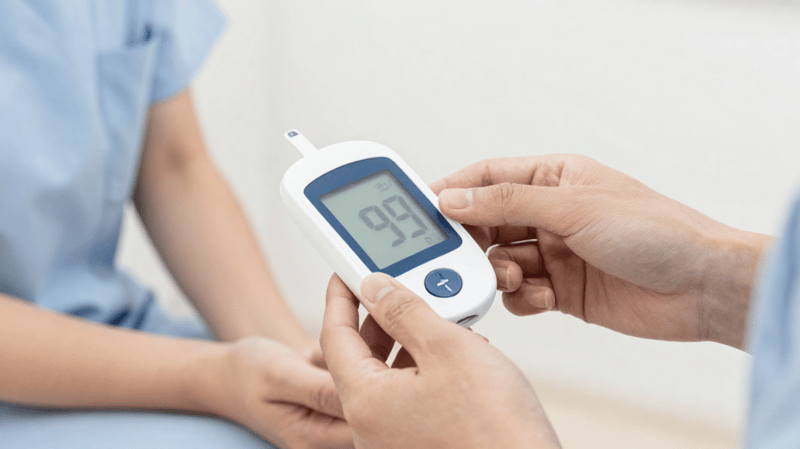
If you or someone you love has been living with type 2 diabetes, here is something your doctor may not have told you yet: for many people, type 2 diabetes is not a life sentence. Science now confirms what some patients have quietly discovered on their own, that with the right support, type 2 diabetes can go into remission. You can reach a point where your blood sugar is normal, your medications are stopped, and your body is working the way it should.
This is not a miracle. It is medicine. And it is finally being recognised at the highest level.
What Is Type 2 Diabetes Remission? The New ICD-10 Code E11.A
Until recently, the word "reversal" was considered controversial in medicine. But in 2021, four of the world's leading diabetes organisations (the American Diabetes Association, the European Association for the Study of Diabetes, the Endocrine Society, and Diabetes UK) came together to agree on an official definition of what remission means.
Definition of type 2 diabetes remission
- HbA1c (a measure of your average blood sugar) falls below 6.5% AND
- Remains below 6.5% for at least three months without any diabetes medication
This is not a fringe idea. Doctors and researchers worldwide now agree on this breakthrough, which is backed by years of real patient success. This evidence is now so well-established that in 2025, a brand-new medical code was introduced: ICD-10 code E11.A “Type 2 diabetes mellitus without complications in remission." For the first time, your doctor can officially document in your medical record that your diabetes is in remission.
The Root Cause of Type 2 Diabetes
The science behind why your body struggles with sugar control is simple:
-
The Liver Fills Up: Excess weight causes fat to build up silently in your liver first (known as fatty liver).
-
Insulin Resistance Starts: This buildup triggers a harmful cycle where your body resists its own insulin, the hormone that manages sugar.
-
The Pancreas Overflows: The liver gets overwhelmed and spills excess fat (lipids) into your pancreas.
-
Blood Sugar Spikes: This fat essentially "clogs" the pancreas, stopping it from regulating your blood sugar properly.
Insulin resistance is at the very root of type 2 diabetes. The good news is that your biology is incredibly resilient. When you lose that deep, internal fat, your insulin sensitivity resets. Your pancreas clears out, starts working normally again, and your blood sugar levels return to a healthy range. Your body is not permanently broken, it simply needs the right conditions to recover.
The Evidence That Proves Remission Is Real
The science points clearly to one central factor: meaningful, sustained weight loss, and the lifestyle changes that make it possible.
The Landmark UK "DiRECT" Study, run in everyday family doctor clinics across the UK, followed 306 adults with type 2 diabetes. Within one year of starting a structured food plan, nearly half reached remission and brought their blood sugar back to normal without medication. For those who managed to lose 15 kilograms (around 33 pounds) or more, the results were even more powerful, yielding an incredible 86% success rate. Even five years later, those in the programme spent significantly more time free from diabetes than patients receiving standard medical care.
These results were not unique to the UK. A similar study in the Middle East, the DIADEM-I trial, achieved 61% remission at 12 months with the same approach, proving this is possible across different cultures and populations.
Other research focusing on low-carbohydrate eating provides even more reassurance:
-
Low-Carb vs. Standard Diets: A massive review of 23 separate studies found that low-carb diets helped 57% of patients achieve normal blood sugar levels within six months, compared to just 31% of those on standard diets.
-
Real-World Clinic Success: One family doctor practice in the UK shifted their patients to this lifestyle and saw 51% of them reverse their diabetes.
-
The Early Bird Advantage: For patients who were diagnosed within the previous year, that success rate jumped to 77%. It shows that the sooner you take action to clear that internal fat, the higher your chances of reversing type 2 diabetes completely.
Remission vs Cure: Staying Diabetes-Free with Lifestyle Medicine
Remission is not the same as a permanent cure. It requires ongoing commitment to lifestyle, and the good news is that you do not have to do it alone.
The most successful remission programmes share one thing in common: a dedicated team of people supporting you. In the DiRECT trial, remission was achieved not in specialist hospitals but in ordinary GP clinics, delivered by trained nurses and dietitians working alongside family doctors. Real-world programmes from Thailand to Europe confirm the same: when a team including physician, dietitian, nurse educator, and psychological counsellor works alongside you, remission becomes sustainable.
Lifestyle medicine bodies worldwide, including the British Society of Lifestyle Medicine and the Australasian Society of Lifestyle Medicine, all affirm that structured dietary intervention and team-based support are at the heart of type 2 diabetes remission care.
Beyond Generic Workouts: Customizing Your Fitness
Your exercise plan matters too, and this is where personalised science makes a real difference. Physiotherapists and exercise specialists can now use a measurement called VO2 max, a reading of your body's aerobic fitness, to design an exercise programme built specifically for your body, not a generic template.
The 2021 European Society of Cardiology guidelines state that individual fitness data is essential for truly tailored exercise prescription, as the same activity means something entirely different to two people at different fitness levels. In people with type 2 diabetes, structured exercise programmes guided by this kind of personalised measurement have been shown to improve both fitness and blood sugar control simultaneously. Your exercise plan can be as precise as your dietary plan.
Your diabetes does not have to define your future. You deserve a healthcare team that actively believes remission is possible for you. Take control of your health, because earning the official medical diagnosis of "Type 2 diabetes mellitus without complications in remission" on your records reflects your ultimate victory.


Dr Shiba Poon
- LMCHK
- MBBS (Lond)
- DRCOG
- DCH (RCPCH)
- PGDipClinDerm (Lond)
- MRCGP
- Honorary Clinical Assistant Professor In Family Medicine (HKU)
Health Articles by Dr Shiba Poon


-1.png?width=768&name=%5BMKT%5DWebsite%20Blog%20Photo%20(40)-1.png)


-2.png?width=768&name=%5BMKT%5DWebsite%20Blog%20Photo%20(27)-2.png)

-2.png?width=768&name=%5BMKT%5DWebsite%20Blog%20Photo%20(22)-2.png)
-1.png?width=768&name=%5BMKT%5DWebsite%20Blog%20Photo%20(21)-1.png)

-2.png?width=768&name=%5BMKT%5DWebsite%20Blog%20Photo%20(16)-2.png)

-4.png?width=768&name=%5BMKT%5DWebsite%20Blog%20Photo%20(3)-4.png)

References
- Riddle, M.C., Cefalu, W.T., Evans, P.H., Gerstein, H.C., Nauck, M.A., Oh, W.K., Rothberg, A.E., le Roux, C.W., Rubino, F., Schauer, P., Taylor, R. and Twenefour, D. (2021) 'Consensus report: definition and interpretation of remission in type 2 diabetes', Diabetes Care, 44(10), pp. 2438–2444. DOI: 10.2337/dci21-0034. Available at: https://diabetesjournals.org/care/article/44/10/2438/138556/Consensus-Report-Definition-and-Interpretation-of (Accessed: 23 July 2026).
- Centers for Medicare and Medicaid Services (2025) ICD-10-CM FY2025: E11.A type 2 diabetes mellitus in remission. Available at: https://www.icd10data.com/ICD10CM/Codes/E00-E89/E08-E13/E11-/E11.A (Accessed: 23 July 2026).
- Lean, M.E.J., Leslie, W.S., Barnes, A.C., Brosnahan, N., Thom, G., McCombie, L., Peters, C., Zhyzhneuskaya, S., Al-Mrabeh, A., Hollingsworth, K.G. and Taylor, R. (2018) 'Primary care-led weight management for remission of type 2 diabetes (DiRECT): an open-label, cluster-randomised trial', The Lancet, 391(10120), pp. 541–551. DOI: 10.1016/S0140-6736(17)33102-1. Available at: https://pubmed.ncbi.nlm.nih.gov/29221645 (Accessed: 23 July 2026).
- Lean, M.E.J., Leslie, W.S., Barnes, A.C., Brosnahan, N., Thom, G., McCombie, L., Peters, C., Zhyzhneuskaya, S., Al-Mrabeh, A., Hollingsworth, K.G. and Taylor, R. (2019) 'Durability of a primary care-led weight-management intervention for remission of type 2 diabetes: 2-year results of the DiRECT open-label, cluster-randomised trial', The Lancet Diabetes & Endocrinology, 7(5), pp. 344–355. DOI: 10.1016/S2213-8587(19)30068-3. Available at: https://pubmed.ncbi.nlm.nih.gov/30852132 (Accessed: 23 July 2026).
- Lean, M.E.J., Leslie, W.S., Barnes, A.C., Brosnahan, N., Thom, G., McCombie, L., Kelly, T., Irvine, K., Peters, C., Zhyzhneuskaya, S., Hollingsworth, K.G., Adamson, A.J., Sniehotta, F.F., Mathers, J.C., McIlvenna, Y., Welsh, P., McConnachie, A., McIntosh, A., Sattar, N. and Taylor, R. (2024) '5-year follow-up of the randomised Diabetes Remission Clinical Trial (DiRECT) of continued support for weight loss maintenance in the UK: an extension study', The Lancet Diabetes & Endocrinology, 12(4), pp. 233–246. DOI: 10.1016/S2213-8587(23)00385-6. Available at: https://pubmed.ncbi.nlm.nih.gov/38423026 (Accessed: 23 July 2026).
- Taheri, S., Zaghloul, H., Chagoury, O., Elhadad, S., Ahmed, S.H., El Khatib, N., Amedi, M., Beltagi, A. and Balhareth, Y. (2020) 'Effect of intensive lifestyle intervention on bodyweight and glycaemia in early type 2 diabetes (DIADEM-I): an open-label, parallel-group, randomised controlled trial', The Lancet Diabetes & Endocrinology, 8(6), pp. 477–489. DOI: 10.1016/S2213-8587(20)30117-0. Available at: https://pubmed.ncbi.nlm.nih.gov/32445735 (Accessed: 23 July 2026).
- Taylor, R., Ramachandran, A., Yancy, W.S. and Forouhi, N.G. (2021) 'Nutritional basis of type 2 diabetes remission', BMJ, 374, n1449. DOI: 10.1136/bmj.n1449. Available at: https://www.bmj.com/content/374/bmj.n1449 (Accessed: 23 July 2026).
- Goldenberg, J.Z., Day, A., Brinkworth, G.D., Sato, J., Yamada, S., Jönsson, T., Beardsley, J., Johnson, J.A., Thabane, L. and Johnston, B.C. (2021) 'Efficacy and safety of low and very low carbohydrate diets for type 2 diabetes remission: systematic review and meta-analysis of published and unpublished randomized trial data', BMJ, 372, m4743. DOI: 10.1136/bmj.m4743. Available at: https://www.bmj.com/content/372/bmj.m4743 (Accessed: 23 July 2026).
- Unwin, D., Delon, C., Unwin, J., Tobin, S. and Taylor, R. (2023) 'What predicts drug-free type 2 diabetes remission? Insights from an 8-year general practice service evaluation of a lower carbohydrate diet with weight loss', BMJ Nutrition, Prevention & Health, 6(1), pp. 46–55. DOI: 10.1136/bmjnph-2022-000544. Available at: https://nutrition.bmj.com/content/early/2023/01/02/bmjnph-2022-000544 (Accessed: 23 July 2026).
- Thailand Ministry of Public Health and WHO Global Coordination Mechanism on NCDs (2026) Thailand's national diabetes remission programme [Case study]. WHO Knowledge Action Portal on NCDs. Available at: https://knowledge-action-portal.com/sites/default/files/2026-02/Thailand_Diabetes_2026.pdf (Accessed: 23 July 2026).
- Pot, G.K., Battjes-Fries, M.C., Patijn, O.N., Pijl, H., Witkamp, R.F., de Visser, M. and Voshol, P.J. (2019) 'Nutrition and lifestyle intervention in type 2 diabetes: pilot study in the Netherlands showing improved glucose control and reduction in glucose lowering medication', BMJ Nutrition, Prevention & Health, 2(1), pp. 43–50. DOI: 10.1136/bmjnph-2018-000012. Available at: https://nutrition.bmj.com/content/2/1/43 (Accessed: 23 July 2026).
- Zeng, K., Chen, B., Li, H., Ren, N., Song, Y., Liang, M., Yang, Y., Huang, Y., Liu, T., Lin, Y. and Xu, G. (2025) 'Effectiveness of a multidisciplinary "2+N system therapy" in achieving remission and metabolic improvement in type 2 diabetes: a real-world study with 1,000 patients', Metabolism Open, 25, 100436. DOI: 10.1016/j.metop.2025.100436. Available at: https://pmc.ncbi.nlm.nih.gov/articles/PMC12771493 (Accessed: 23 July 2026).
- British Society of Lifestyle Medicine (2025) BSLM consensus statement: anti-obesity medications — the role of lifestyle medicine in obesity care. Available at: https://bslm.org.uk/bslm-statement-anti-obesity-medications (Accessed: 23 July 2026).
- Australasian Society of Lifestyle Medicine (2024) Parliamentary inquiry into diabetes: ASLM submission. Available at: https://lifestylemedicine.org.au/wp-content/uploads/2024/11/Parliamentary-Inquiry-into-Diabetes-ASLM-submission-web-version.pdf (Accessed: 23 July 2026).
- Visseren, F.L.J., Mach, F., Smulders, Y.M., Carballo, D., Koskinas, K.C., Bäck, M. and ESC Scientific Document Group (2021) '2021 ESC Guidelines on cardiovascular disease prevention in clinical practice', European Heart Journal, 42(34), pp. 3227–3337. DOI: 10.1093/eurheartj/ehab484. Available at: https://pubmed.ncbi.nlm.nih.gov/34458905 (Accessed: 23 July 2026).