 Central General Practice
 Repulse Bay
 Clearwater Bay
 BodyWorX Clinic
 Central Specialist Clinic
 MindWorX Clinic
 Family Clinic
 OT&P Annerley Midwives Clinic
 WellWorX Clinic

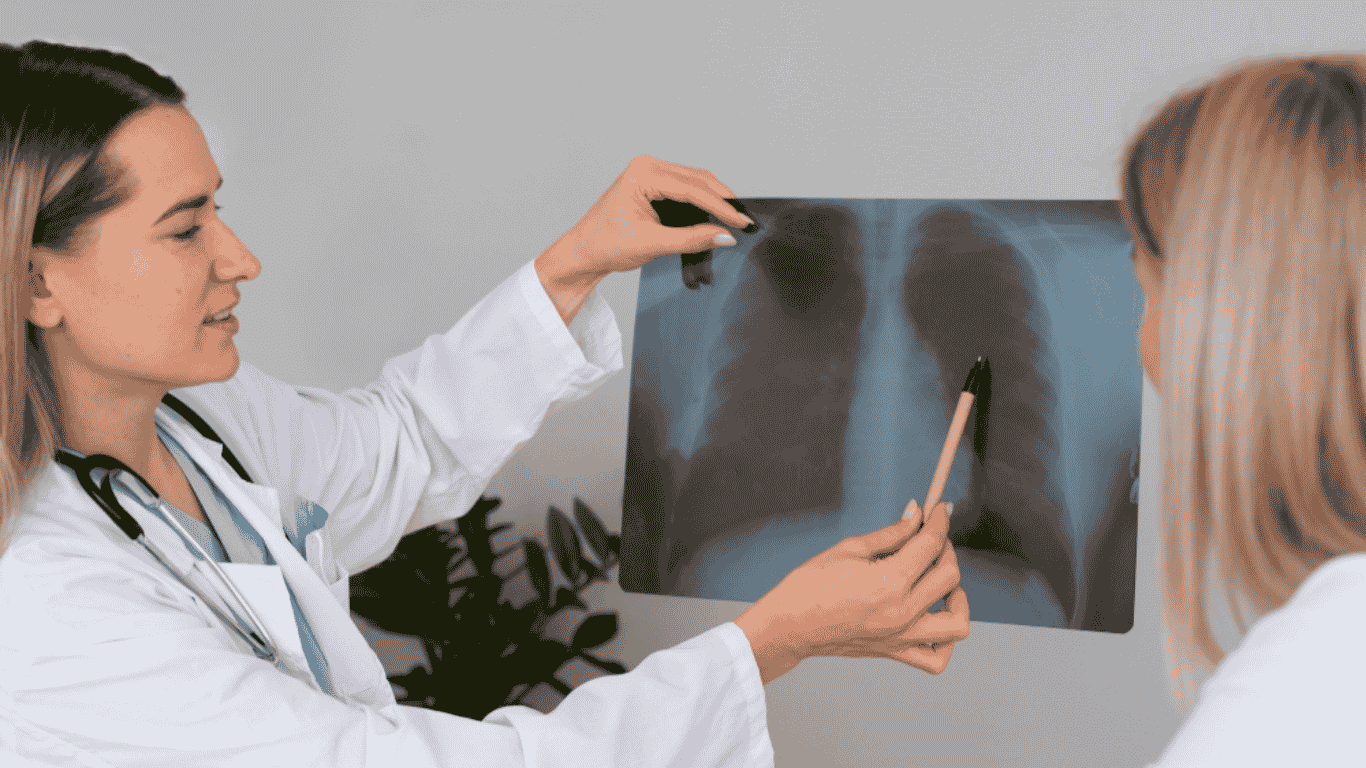
Lung cancer is something many of us associate with heavy smokers, but in Hong Kong, the story is more complicated than that. Understanding the real picture could help you or someone you love catch this disease early, when it is most treatable.
Local Data: The Rise of Non-Smoker Lung Cancer in HK
Lung cancer is the most common and fatal cancer in Hong Kong. In 2023, the Hong Kong Cancer Registry recorded 6,111 new cases, which accounts for 16.1% of all local cancers.
Shockingly, a massive wave of these diagnoses involves people who have never smoked. Up to one third of lung cancers in East Asia target never-smokers, compared to only 10% to 25% globally. This growing threat is now so substantial that non-smoker lung cancer alone would rank as the world's seventh most common cancer.
Causes of Lung Cancer in Non-Smokers: Pollution & Environment
So, why are never-smokers in our region facing such high risks? The answer lies in a combination of environmental and biological factors unique to Hong Kong.
-
Air Pollution: Living in a dense, busy city means daily exposure to fine air particles known as PM2.5. Research has shown that higher PM2.5 levels are directly linked to higher rates of lung cancer, even in people who have never smoked.
- Cooking Fumes: Traditional Chinese cooking at high temperatures releases harmful chemicals into the air. Studies have found a clear link between exposure to these fumes over many years and a higher risk of lung cancer, particularly in women who do the cooking at home.
- Genetics: People of East Asian ancestry appear to have a higher biological susceptibility to certain types of lung cancer, even after accounting for environmental factors. This may relate to specific gene variants that are more common in our population.
- Secondhand Smoke: Living or working with smokers over many years also raises your risk. Inhaling secondhand smoke delivers the same cancer-causing carcinogens directly into vulnerable lung tissues.
The Genetic Link to Non-Smoker Lung Cancer
If someone in your immediate family, such as a parent, sibling, or child, has had lung cancer, your own risk is higher than average. This is especially true if that family member was diagnosed at a young age (before 50 years old). Research shows that siblings of someone diagnosed with lung cancer before age 50 can have a risk more than three times higher than the general population.
This does not mean you will get lung cancer. But it does mean that a conversation with your doctor about monitoring and early detection is very much worthwhile.
Lung Cancer Warning Signs: When a Cough Is Serious
Lung cancer is often called a "silent" disease because in its early stages, it may cause no symptoms at all. However, there are warning signs that should prompt a visit to your doctor, including:
- A cough that is new, has changed in character, or has lasted more than three weeks
- Coughing up blood, even a small amount
- Unexplained weight loss or loss of appetite
- New breathlessness, chest pain or shoulder pain without an obvious cause
- A hoarse voice that has lasted more than a few weeks
- Swollen glands in your neck or collarbone area
- Unexplained and persistent tiredness
None of these symptoms automatically means lung cancer, but each one deserves proper investigation rather than a "wait and see" approach.
Chest X-Ray vs. Low-Dose CT of the Thorax: Which Is Better?
Many people assume that a normal chest X-ray means their lungs are perfectly healthy. Unfortunately, that is a common misconception. A chest X-ray is a helpful starting point, but it takes a flat, 2D picture where overlapping bones and organs can easily hide tiny tumours.
A Low-Dose CT (LDCT) scan of the thorax, on the other hand, works like a 3D camera. It takes highly detailed, cross-sectional slices of your lungs. Here is how they stack up when it comes to saving lives:
-
Spotting the Cancer: In a landmark US medical trial, standard X-rays only picked up lung cancer in about 7% of cases, while low-dose CT scans caught 24%.
-
Catching it Early: LDCT scans can find tiny growths just a few millimeters wide—long before you feel sick. In a large South Korean study of non-smokers, an incredible 93% of lung cancers found via LDCT were caught at Stage 1, when it is easiest to cure.
-
Lowering Death Rates: A major international study shows that getting regular LDCT scans reduces the risk of dying from lung cancer by 24% over 10 years compared to not getting screened.
While an LDCT scan uses a tiny, safe amount of radiation, it occasionally flags harmless spots (benign nodules) that require a follow-up test to clear up. Because everyone’s risk factors are unique, you should look at your personal background alongside a doctor to decide if an LDCT screening is right for you.
Simple Steps to Protect Your Lung Health Today
Talk to your doctor if you have any of the warning signs above, if a close family member has had lung cancer, or if you have significant cooking fume or air pollution exposure over many years. Quitting smoking, if you smoke, remains the single most powerful step anyone can take. And for those who have never smoked, knowing your risks and staying alert to your body's signals could make all the difference.
Early detection saves lives. In Hong Kong, that message matters more than ever.


Dr Shiba Poon
- LMCHK
- MBBS (Lond)
- DRCOG
- DCH (RCPCH)
- PGDipClinDerm (Lond)
- MRCGP
- Honorary Clinical Assistant Professor In Family Medicine (HKU)
Health Articles by Dr Shiba Poon


-1.png?width=768&name=%5BMKT%5DWebsite%20Blog%20Photo%20(40)-1.png)




-2.png?width=768&name=%5BMKT%5DWebsite%20Blog%20Photo%20(27)-2.png)

-2.png?width=768&name=%5BMKT%5DWebsite%20Blog%20Photo%20(22)-2.png)
-1.png?width=768&name=%5BMKT%5DWebsite%20Blog%20Photo%20(21)-1.png)


-2.png?width=768&name=%5BMKT%5DWebsite%20Blog%20Photo%20(16)-2.png)


-4.png?width=768&name=%5BMKT%5DWebsite%20Blog%20Photo%20(3)-4.png)


References
- Centre for Health Protection, Department of Health, Hong Kong SAR (2024) Lung cancer. Available at: https://www.chp.gov.hk/en/healthtopics/content/25/49.html (Accessed: 12 October 2026).
- Zhou, F. and Zhou, C. (2018) 'Lung cancer in never smokers — the East Asian experience', Translational Lung Cancer Research, 7(4), pp. 450–463. doi: 10.21037/tlcr.2018.05.14. Available at: https://pmc.ncbi.nlm.nih.gov/articles/PMC6131183 (Accessed: 12 October 2026).
- Kerpel-Fronius, A., et al. (2022) 'Screening for Lung Cancer in Individuals Who Never Smoked: An International Association for the Study of Lung Cancer Early Detection and Screening Committee Report. Journal of thoracic oncology : official publication of the International Association for the Study of Lung Cancer, 17(1), 56–66. https://doi.org/10.1016/j.jtho.2021.07.031. Available at: https://www.jto.org/article/S1556-0864(21)02391-1/fulltext (Accessed: 12 October 2026).
- Turner, M.C., Krewski, D., Pope, C.A. 3rd et al. (2011) 'Long-term ambient fine particulate matter air pollution and lung cancer in a large cohort of never-smokers', American Journal of Respiratory and Critical Care Medicine, 184(12), pp. 1374–1381. doi: 10.1164/rccm.201106-1011OC. Available at: https://pubmed.ncbi.nlm.nih.gov/21980033 (Accessed: 12 October 2026).
- Xue, Y., Jiang, Y., Jin, S. and Li, Y. (2016) 'Association between cooking oil fume exposure and lung cancer among Chinese nonsmoking women: a meta-analysis', Onco Targets and Therapy, 9, pp. 2987–2992. doi: 10.2147/OTT.S100949. Available at: https://www.tandfonline.com/doi/full/10.2147/OTT.S100949 (Accessed: 12 October 2026).
- Possenti, I., Romelli, M., Carreras, G., Biffi, A., Bagnardi, V., Specchia, C., Gallus, S. and Lugo, A. (2024) 'Association between second-hand smoke exposure and lung cancer risk in never-smokers: a systematic review and meta-analysis', European Respiratory Review, 33(174), p. 240077. doi: 10.1183/16000617.0077-2024. Available at: https://publications.ersnet.org/content/errev/33/174/240077 (Accessed: 12 October 2026).
- Coté, M.L., Liu, M., Bonassi, S. et al. (2012) 'Increased risk of lung cancer in individuals with a family history of the disease: a pooled analysis from the International Lung Cancer Consortium', European Journal of Cancer, 48(13), pp. 1957–1968. doi: 10.1016/j.ejca.2012.01.038. Available at: https://pmc.ncbi.nlm.nih.gov/articles/PMC3445438 (Accessed: 12 October 2026).
- National Institute for Health and Care Excellence (2015, updated April 2026) Suspected cancer: recognition and referral. NICE guideline NG12. Available at:https://www.nice.org.uk/guidance/ng12 (Accessed: 12 October 2026).
- National Lung Screening Trial Research Team (2011) 'Reduced lung-cancer mortality with low-dose computed tomographic screening', New England Journal of Medicine, 365(5), pp. 395–409. doi: 10.1056/NEJMoa1102873. Available at: https://www.nejm.org/doi/full/10.1056/NEJMoa1102873 (Accessed: 12 October 2026).
- de Koning, H.J., van der Aalst, C.M., de Jong, P.A. et al. (2020) 'Reduced lung-cancer mortality with volume CT screening in a randomized trial', New England Journal of Medicine, 382(6), pp. 503–513. doi: 10.1056/NEJMoa1911793. Available at: https://www.nejm.org/doi/full/10.1056/NEJMoa1911793 (Accessed: 12 October 2026).
- Kang, H.R., Cho, J.Y., Lee, S.H. et al. (2019) 'Role of low-dose computerized tomography in lung cancer screening among never-smokers', Journal of Thoracic Oncology, 14(3), pp. 436–444. doi: 10.1016/j.jtho.2018.11.002. Available at: https://pubmed.ncbi.nlm.nih.gov/30445189 (Accessed: 12 October 2026).