 Central General Practice
 Repulse Bay
 Clearwater Bay
 BodyWorX Clinic
 Central Specialist Clinic
 MindWorX Clinic
 Family Clinic
 OT&P Annerley Midwives Clinic
 WellWorX Clinic

-2.png?width=800&name=%5BMKT%5DWebsite%20Blog%20Photo%20(27)-2.png)
The Hidden Chemistry in HK Cooking: What are HCAs and AGEs?
Living in Hong Kong as an expat is an incredible adventure. From sunny junk boat trips across Victoria Harbour to weekend brunches in Soho, the city’s vibrant social calendar revolves almost entirely around food.
While exploring our world-class culinary landscape is a joy, the cooking methods that make these dishes taste so delicious can inadvertently introduce specific food toxins into our bodies. When cooked at high temperatures, certain foods produce chemical compounds known as HCAs, PAHs, AGEs, and acrylamide. Over time, these compounds can drive cellular ageing, trigger systemic inflammation, and increase cancer risks.
![[MKT]Website Blog Photo-Aug-12-2026-07-31-01-5151-AM](https://www.otandp.com/hs-fs/hubfs/%5BMKT%5DWebsite%20Blog%20Photo-Aug-12-2026-07-31-01-5151-AM.png?width=343&height=193&name=%5BMKT%5DWebsite%20Blog%20Photo-Aug-12-2026-07-31-01-5151-AM.png)
The good news? You don’t have to give up your social life. By understanding where these hidden compounds live in a typical Hong Kong lifestyle, you can make simple, empowered shifts to protect your well-being.
1. The Classic Junk Boat & Beach Barbecue
Whether you are cruising around Lamma Island or setting up a grill at Shek O, outdoor charcoal barbecues are staple weekend rituals. However, grilling muscle meats over open flames creates a perfect storm for two specific compounds:
- PAHs (Polycyclic Aromatic Hydrocarbons): When fat from your steak or burgers drips directly onto glowing coals, it generates smoke packed with PAHs, which then coats the surface of your food.
- HCAs (Heterocyclic Amines): The extreme, direct heat causes natural amino acids and creatine in meat to fuse together, forming these inflammatory compounds.
2. High-End Steakhouses & Gastropubs
Central and Lan Kwai Fong are home to some of the best flame-broiled steakhouses and craft burger joints in the world. The trademark charred crust that gives premium steaks their incredible flavour is unfortunately where HCAs accumulate. Additionally, when meats are basted in sweet marinades or barbecue glazes and seared at high heat, sugar binds to proteins to create AGEs (Advanced Glycation End-products). AGEs are known for accelerating skin ageing and causing stiffness in blood vessels.
3. Delving into Local "Siu Mei" (Roast Meats)
Embracing the local food culture is part of the joy of living here, and sweet, sticky Char Siu (barbecued pork) or crispy roast goose are crowd favorites. However, Hong Kong's Center for Food Safety explicitly flags Siu Mei as a primary regional source of PAHs. The signature charred black edges on a plate of Char Siu represent a heavy concentration of both PAHs and AGEs, resulting from long roasting hours under a sugary maltose glaze.
4. Café Culture & Late-Night Pub Sides
Hong Kong boasts an incredible specialty coffee scene. If your daily routine includes multiple flat whites alongside artisan sourdough toast, or sharing heavily fried pub chips during a Friday happy hour, your diet may be high in acrylamide. This chemical forms naturally when starchy foods containing specific amino acids are baked, fried, or toasted at high temperatures, including coffee bean roasting and deep-frying potatoes.
How to Cut the Cancer Risk of Your Favourite Hong Kong Dishes
Protecting your cells doesn't mean staying at home. You can drastically lower your exposure with these easy, practical adjustments:
- Marinate before you grill: Soaking your meats in a marinade containing lemon juice, vinegar, garlic, or antioxidant-rich herbs like rosemary for just 30 minutes can slash HCA formation by up to 90%.
- Trim the char: When enjoying Char Siu or a flame-grilled steak, simply use your knife to trim away the blackened, heavily charred edges where toxins are most concentrated.
- Balance with fresh greens: Pair your richer meals with raw or lightly steamed cruciferous vegetables (like broccoli or bok choy). They contain natural compounds that help your liver safely process and clear these toxins.
Support Liver Detox with Glutathione & Vitamin C
To give your body an extra layer of defence, you can proactively optimise your liver's natural detoxification pathways using specific, targeted nutrients. When your liver processes food-borne toxins like HCAs and PAHs, it heavily relies on Glutathione, often called the body's "master antioxidant", to neutralise these harmful molecules and safely flush them out of your system.
Boost your glutathione levels naturally with sulfur-rich foods like garlic, onions, and cruciferous greens. For maximum impact, pair them with vitamin C. This duo provides double the protection: vitamin C directly fights off free radicals from high-heat toxins while continuously recycling your body's glutathione back into action.
How to Test Your Glutathione Levels for Optimal Longevity
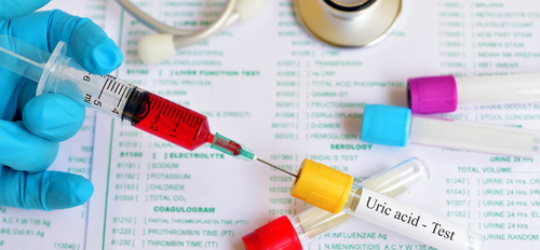
For those who want a data-driven window into their cellular health, the Glutathione Index blood test offers one of the most direct snapshots of your antioxidant reserve. This test measures the ratio of active "reduced" glutathione (GSH) to spent "oxidised" glutathione (GSSG), a recognised indicator of cellular redox status. A high GSH/GSSG ratio signals that your cells retain strong antioxidant capacity to safely process dietary toxins. A low ratio, conversely, acts as an early-warning flag for significant oxidative stress, indicating that your body may benefit from more intensive nutritional support.
Eating Well in Hong Kong Doesn't Have to Come At a Hidden Cost
The cooking methods behind the city's most beloved can generate a class of harmful compounds, which accumulate in food and, over time, can drive inflammation, accelerate cellular ageing, and raise long-term cancer risk. The good news is that a few simple, practical habits like marinating meats before grilling, trimming charred edges, and pairing rich meals with cruciferous vegetables, can dramatically reduce your exposure without sacrificing the food culture that makes life here so enjoyable.
For those who want to go further, targeted nutritional support through boosting glutathione and vitamin C can proactively strengthen your liver's detoxification capacity. And for a personalised, data-driven baseline, biomarkers such as the Glutathione Index (GSH/GSSG) can reveal how well your body is managing its oxidative load, empowering you to make smarter, more informed choices at every meal.


Dr Shiba Poon
- LMCHK
- MBBS (Lond)
- DRCOG
- DCH (RCPCH)
- PGDipClinDerm (Lond)
- MRCGP
- Honorary Clinical Assistant Professor In Family Medicine (HKU)
Health Articles by Dr Shiba Poon


-1.png?width=768&name=%5BMKT%5DWebsite%20Blog%20Photo%20(40)-1.png)


-2.png?width=768&name=%5BMKT%5DWebsite%20Blog%20Photo%20(27)-2.png)

-2.png?width=768&name=%5BMKT%5DWebsite%20Blog%20Photo%20(22)-2.png)
-1.png?width=768&name=%5BMKT%5DWebsite%20Blog%20Photo%20(21)-1.png)

-2.png?width=768&name=%5BMKT%5DWebsite%20Blog%20Photo%20(16)-2.png)

-4.png?width=768&name=%5BMKT%5DWebsite%20Blog%20Photo%20(3)-4.png)

References
- Hee, P.T.E., Liang, Z., Zhang, P. and Fang, Z. (2024) 'Formation mechanisms, detection methods and mitigation strategies of acrylamide, polycyclic aromatic hydrocarbons and heterocyclic amines in food products', Food Control, 158, p. 110236. doi: 10.1016/j.foodcont.2023.110236. Available at: https://www.sciencedirect.com/science/article/pii/S0956713523006369?via%3Dihub
- Adeyeye, S.A.O., Sivapriya, T. and Sankarganesh, P. (2025) 'Formation and mitigation of heterocyclic amines (HCAs) and polycyclic aromatic hydrocarbons (PAHs) in high temperature processed meat products: a review', Discover Food, 5, article 258. doi: 10.1007/s44187-025-00391-w. Available at: https://link.springer.com/article/10.1007/s44187-025-00391-w
- Bulanda, S. and Janoszka, B. (2022) 'Consumption of thermally processed meat containing carcinogenic compounds (polycyclic aromatic hydrocarbons and heterocyclic aromatic amines) versus a risk of some cancers in humans and the possibility of reducing their formation by natural food additives: a literature review', International Journal of Environmental Research and Public Health, 19(8), p. 4781. doi: 10.3390/ijerph19084781. Available at: https://pmc.ncbi.nlm.nih.gov/articles/PMC9024867/
- Centre for Food Safety (no date) Risk assessment study on polycyclic aromatic hydrocarbons in Siu Mei and Lo Mei. Hong Kong: Centre for Food Safety. Available at: https://www.cfs.gov.hk/english/programme/programme_rafs/files/ra_pah.pdf
- Kwon, J., Kim, I., Moon, B., Lee, K.-W., Jung, M. and Lee, J. (2023) 'The effects of different cooking methods and spices on the formation of 11 HCAs in chicken wing and pork belly', Food Control, 147, p. 109572. doi: 10.1016/j.foodcont.2022.109572. Available at: https://www.sciencedirect.com/science/article/abs/pii/S0956713522007654
- Uribarri, J., Woodruff, S., Goodman, S., Cai, W., Chen, X., Pyzik, R., Yong, A., Striker, G.E. and Vlassara, H. (2010) 'Advanced glycation end products in foods and a practical guide to their reduction in the diet', Journal of the American Dietetic Association, 110(6), pp. 911–916. doi: 10.1016/j.jada.2010.03.018. Available at: https://www.jandonline.org/article/S0002-8223(10)00238-5/
- Government Information Services (2004) Food safety of Siu Mei and Lo Mei [press release, 13 July 2004]. Hong Kong: Government of Hong Kong. Available at: https://www.info.gov.hk/gia/general/200407/13/0713185.htm
- Centre for Food Safety (no date) Polycyclic aromatic hydrocarbons in barbecued and roasted meats. Food Safety Focus, Issue 92. Hong Kong: Centre for Food Safety. Available at: https://www.cfs.gov.hk/english/multimedia/multimedia_pub/multimedia_pub_fsf_92_02.html
- Centre for Food Safety (2025) Risk assessment on acrylamide in certain foods (Programme RAFS FC 01/25). Hong Kong: Centre for Food Safety. Available at: https://www.cfs.gov.hk/english/programme/programme_rafs/files/programme_rafs_fc_01_25.pdf
- European Food Information Council (2025) Acrylamide in food: what it is & how to reduce levels. Brussels: EUFIC. Available at: https://www.eufic.org/en/food-safety/article/acrylamide-in-food
- Smith, J.S., Ameri, F. and Gadgil, P. (2008) 'Effect of marinades on the formation of heterocyclic amines in grilled beef steaks', Journal of Food Science, 73(6), pp. T100–T105. doi: 10.1111/j.1750-3841.2008.00856.x. Available at: https://pubmed.ncbi.nlm.nih.gov/19241593
- Kwon, J., Kim, I., Lee, K.-W., Jung, M., Lee, H., Kim, S., Moon, B. and Lee, J. (2025) 'Mitigation of heterocyclic amines, polycyclic aromatic hydrocarbons, and acrylamide in air-fried chicken and beef: effects of cooking methods and marinades', Food Science and Biotechnology, 34(16), pp. 3873–3885. doi: 10.1007/s10068-025-02005-8. Available at: https://pmc.ncbi.nlm.nih.gov/articles/PMC12589718/
- Carr, A.C. and Frei, B. (1999) 'Toward a new recommended dietary allowance for vitamin C based on antioxidant and health effects in humans', American Journal of Clinical Nutrition, 69(6), pp. 1086–1107. doi: 10.1093/ajcn/69.6.1086. Available at: https://www.sciencedirect.com/science/article/pii/S0002916522044136?via%3Dihub
- Giustarini, D., Tsikas, D., Colombo, G., Milzani, A., Dalle-Donne, I., Fanti, P. and Rossi, R. (2017) 'Assessment of glutathione/glutathione disulphide ratio in human blood, cerebrospinal fluid, and breath condensate', Free Radical Biology and Medicine, 99, pp. 259–267. doi: 10.1016/j.freeradbiomed.2017.08.008. Available at: https://pubmed.ncbi.nlm.nih.gov/2880781