 Central General Practice
 Repulse Bay
 Clearwater Bay
 BodyWorX Clinic
 Central Specialist Clinic
 MindWorX Clinic
 Family Clinic
 OT&P Annerley Midwives Clinic
 WellWorX Clinic


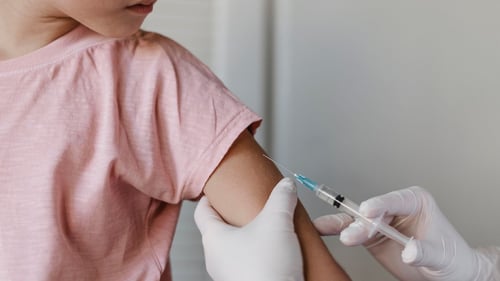
A New Way to Get Your Flu Jab
Every year, influenza affects millions of people worldwide, causing anything from a few uncomfortable days in bed to serious complications requiring hospital care. For decades, most flu vaccines were made using fertilised chicken eggs. A newer option, the recombinant influenza vaccine (RIV), has changed how some of these vaccines are produced. This FAQs explain what RIV is, who it suits, and how it compares to the traditional flu jab.
Recombinant Flu Vaccine FAQs: 8 Key Questions Answered
Find the Right Flu Vaccine for You
If you are unsure which vaccines are right for you this season, your doctor or nurse can advise you based on your age, health, and vaccination history.
Whether you are a lifelong Hong Kong resident or living here as an expat, getting your annual flu vaccination, including the recombinant option if it suits you, is one of the most straightforward steps you can take each year to protect yourself.

Dr Shiba Poon
- LMCHK
- MBBS (Lond)
- DRCOG
- DCH (RCPCH)
- PGDipClinDerm (Lond)
- MRCGP
- Honorary Clinical Assistant Professor In Family Medicine (HKU)
Health Articles by Dr Shiba Poon


-1.png?width=768&name=%5BMKT%5DWebsite%20Blog%20Photo%20(40)-1.png)




-2.png?width=768&name=%5BMKT%5DWebsite%20Blog%20Photo%20(27)-2.png)

-2.png?width=768&name=%5BMKT%5DWebsite%20Blog%20Photo%20(22)-2.png)
-1.png?width=768&name=%5BMKT%5DWebsite%20Blog%20Photo%20(21)-1.png)


-2.png?width=768&name=%5BMKT%5DWebsite%20Blog%20Photo%20(16)-2.png)


-4.png?width=768&name=%5BMKT%5DWebsite%20Blog%20Photo%20(3)-4.png)



References
- Cox, M.M. and Hollister, J.R. (2009) 'FluBlok, a next generation influenza vaccine manufactured in insect cells', Biologicals, 37(3), pp. 182–189. doi: 10.1016/j.biologicals.2009.02.014. Available at: https://pubmed.ncbi.nlm.nih.gov/19297194/ (Accessed: 22 September 2026).
- Centers for Disease Control and Prevention (CDC) (2025) Recombinant Influenza (Flu) Vaccine. Available at: https://www.cdc.gov/flu/vaccine-types/flublok-vaccine.html (Accessed: 22 September 2026).
- Center for Infectious Disease Research and Policy (CIDRAP) (2013) FDA approves first flu vaccine grown in insect cells, CIDRAP News, 17 January. Available at: https://www.cidrap.umn.edu/influenza-vaccines/fda-approves-first-flu-vaccine-grown-insect-cells (Accessed: 22 September 2026).
- Dunkle, L.M. et al. (2017) 'Efficacy of Recombinant Influenza Vaccine in Adults 50 Years of Age or Older', New England Journal of Medicine, 376(25), pp. 2427–2436. doi: 10.1056/NEJMoa1608862. Available at: https://www.nejm.org/doi/full/10.1056/NEJMoa1608862 (Accessed: 22 September 2026).
- Food and Drug Administration (FDA) (2026) Package Insert: Flublok (Influenza Vaccine) 2026–2027 Season. Available at: https://www.fda.gov/media/179778/download (Accessed: 22 September 2026).
- American College of Obstetricians and Gynecologists (ACOG) (2025) Influenza in Pregnancy: Prevention and Treatment, Practice Advisory, August. Available at: https://www.acog.org/clinical/clinical-guidance/practice-advisory/articles/2025/08/influenza-in-pregnancy-prevention-and-treatment (Accessed: 22 September 2026).
- Hsiao, A. et al. (2024) 'Safety of quadrivalent recombinant influenza vaccine in pregnant persons and their infants', AJOG Global Reports, 4(4), p. 100395. doi: 10.1016/j.xagr.2024.100395. Available at: https://www.sciencedirect.com/science/article/pii/S2666577824000893 (Accessed: 22 September 2026).
- Centers for Disease Control and Prevention (CDC) (2025) Guidelines for Vaccinating Pregnant Women, 22 August. Available at: https://www.cdc.gov/vaccines-pregnancy/hcp/vaccination-guidelines/index.html (Accessed: 22 September 2026).
- Centers for Disease Control and Prevention/Advisory Committee on Immunization Practices (ACIP) (2021) General Best Practice Guidelines for Immunization. Available at: https://stacks.cdc.gov/view/cdc/108917 (Accessed: 22 September 2026).
- Centers for Disease Control and Prevention (CDC) (2025) Getting a Flu Vaccine and Other Recommended Vaccines at the Same Time. Available at: https://www.cdc.gov/flu/vaccines/coadministration.html (Accessed: 22 September 2026).
- Committee on Infectious Diseases, American Academy of Pediatrics (2025) 'Recommendations for Prevention and Control of Influenza in Children, 2025–2026: Technical Report', Pediatrics, 156(6), e2025073622. doi: 10.1542/peds.2025-073622. Available at: https://publications.aap.org/pediatrics/article/156/6/e2025073622/202846/Recommendations-for-Prevention-and-Control-of (Accessed: 22 September 2026).