 Central General Practice
 Repulse Bay
 Clearwater Bay
 BodyWorX Clinic
 Central Specialist Clinic
 MindWorX Clinic
 Family Clinic
 OT&P Annerley Midwives Clinic
 WellWorX Clinic


You forgot where you put your keys again. You struggled to find the right word mid-sentence. You feel like your mind is wrapped in cotton wool. If this sounds familiar, you are not alone, and you are probably wondering: could this be the beginning of Alzheimer's disease?
The reassuring truth is that for most people, brain fog is not Alzheimer's. But it is worth understanding what is actually going on, and what tests can help give you clarity.
What Causes Brain Fog?
Brain fog is an everyday term for a cluster of symptoms: difficulty concentrating, forgetfulness, mental slowing, and trouble finding words. It is incredibly common, and the causes are wide ranging.
Hormonal Changes: Perimenopause and Menopause
Women going through perimenopause (the years of hormonal fluctuation before periods stop) are up to 1.3 times more likely to report brain fog and memory problems compared to women who have not yet reached this stage of life. Hormonal shifts, disrupted sleep, and mood changes all play a role. Importantly, these cognitive changes are typically mild and often improve after menopause.
Post-Viral Illness: Long COVID
Long COVID is another major contributor. Studies show that approximately 30% of people who have had COVID-19 report persistent brain fog, with rates rising the longer symptoms continue. Women are more affected than men, and the underlying causes appear to involve inflammation and changes in blood flow in the brain.
Other Common Causes
Other frequent culprits include depression (which can mimic memory loss very convincingly), thyroid problems, vitamin B12 deficiency, sleep apnoea, and certain medications.
Brain Fog vs. Alzheimer's: Knowing the Difference
Alzheimer's disease causes a specific type of brain change: the gradual build-up of a sticky protein called amyloid beta between brain cells, eventually forming plaques that disrupt how brain cells communicate. This process begins silently, decades before symptoms appear. Genetics can also play a role: people who carry a gene variant called APOE ε4 have a higher inherited risk of developing Alzheimer's, though carrying it does not mean the disease is inevitable.
Because these internal changes manifest differently than day-to-day mental fatigue, it helps to understand what the biological shift looks like in practice.
Early Alzheimer's Symptoms vs Everyday Brain Fog
True early Alzheimer's disease is usually more than just feeling temporarily foggy. It typically disrupts daily function in ways that impact independence, and others around you will begin to notice the changes too.- Disruptive memory loss: Forgetting recently learned information, asking the same questions repeatedly, or relying heavily on memory aids for daily tasks.
- Confusion with time or place: Getting lost in familiar neighbourhoods or losing track of dates, seasons, and the passage of time.
- Difficulty managing everyday tasks: Struggling to follow a familiar recipe, balance a checkbook, or manage monthly bills.
- Misplacing items with an inability to retrace steps: Putting things in unusual places (like keys in the freezer) and being unable to think back to find them.
- New challenges with words: Struggling to follow or join a conversation, stopping mid-sentence, or calling things by the wrong name.
From Bloodwork to Cognitive Tests: How Doctors Check Your Brain
If you are worried about brain fog, there is a clear and straightforward sequence of tests your doctor can use to investigate. Here is how it typically works:
Step 1: A Simple Cognitive Test (MoCA)
The first step is a short paper-based test called the Montreal Cognitive Assessment, or MoCA. It takes about 10 minutes and can be done right in your doctor's clinic.
It checks:
- Memory
- Concentration and attention
- Language and word-finding
- Problem-solving skills
Step 2: Basic Blood Tests
Before or alongside the cognitive test, your doctor will check for common and very treatable causes of brain fog, including:
-
Thyroid function
-
Vitamin B12 and folate levels
-
Full blood count
-
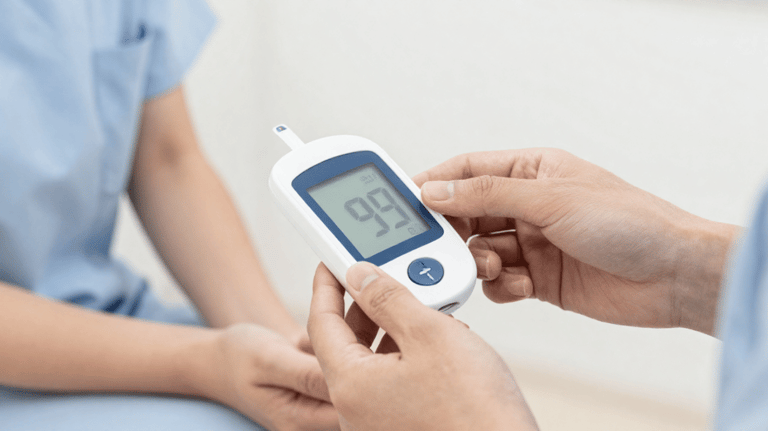
Blood sugar
-
Kidney and liver function
These are simple tests that are easily missed but can make a significant difference when found and treated.
Step 3: A Mental Health Check
Depression is one of the most common and most overlooked reasons people feel mentally slowed down. It can look remarkably similar to early memory problems. Your doctor may ask you to fill in a short questionnaire. Depression is both common and highly treatable.
Step 4: Blood Tests for Alzheimer's Risk (p-tau 217 and APOE)
If the initial tests are inconclusive and Alzheimer's disease remains a concern, two blood tests can provide further clarity.
p-tau 217 measures an abnormal protein produced by the brain in Alzheimer's disease. Here is how to interpret the result:
-
Low result: Alzheimer's pathology is unlikely. Your doctor can confidently look for other causes. Studies show this test rules out Alzheimer's brain pathology with around 90 to 95% accuracy.
-
High result: Raises concern and needs confirmation with further specialist testing.
-
Middle (indeterminate) result: Uncertain. A repeat blood test 6 to 12 months after, or specialist follow-up is needed.
APOE genetic testing checks whether you carry the ε4 gene variant associated with a higher inherited risk of Alzheimer's. Carrying one copy raises lifetime risk approximately three to four times, while two copies raise it ten to fifteen times. However, many carriers never develop the disease; it is a risk factor, not a certainty.
Crucially, local studies in Hong Kong have confirmed that APOE ε4 is a significant risk factor in Chinese populations. Research also suggests that East Asian ancestry may amplify its effects compared to other ethnic groups. Because of these unique genetic factors and the psychological impact of the results, this test should always be discussed with a doctor.
The Bottom Line
Brain fog is real, it is common, and it deserves proper attention. But it is rarely early Alzheimer's.
Here is what to remember:
-
Most brain fog has a treatable cause: hormonal changes, post-viral illness, depression, nutritional deficiencies, or medication side effects.
-
A simple cognitive test and basic blood work are the right first steps.
-
If Alzheimer's remains a concern, the p-tau 217 blood test offers a reliable way to reduce uncertainty.
-
Your genetic risk, including APOE status, can add useful context but should always be explored under doctor’s guidance.
-
You deserve answers, and thankfully, good tools now exist to find them.


Dr Shiba Poon
- LMCHK
- MBBS (Lond)
- DRCOG
- DCH (RCPCH)
- PGDipClinDerm (Lond)
- MRCGP
- Honorary Clinical Assistant Professor In Family Medicine (HKU)
Health Articles by Dr Shiba Poon



-1.png?width=768&name=%5BMKT%5DWebsite%20Blog%20Photo%20(40)-1.png)




-2.png?width=768&name=%5BMKT%5DWebsite%20Blog%20Photo%20(27)-2.png)

-2.png?width=768&name=%5BMKT%5DWebsite%20Blog%20Photo%20(22)-2.png)
-1.png?width=768&name=%5BMKT%5DWebsite%20Blog%20Photo%20(21)-1.png)


-2.png?width=768&name=%5BMKT%5DWebsite%20Blog%20Photo%20(16)-2.png)


-4.png?width=768&name=%5BMKT%5DWebsite%20Blog%20Photo%20(3)-4.png)



References
- Naysmith, L.F., Ward, H., Elliott, P., Atchison, C., Hellyer, P., Denno, P., Williams, S.C.R. and Hampshire, A. (2026) 'Cognition and the menopause transition: cross-sectional evidence from a large community cohort', npj Women's Health. doi: 10.1038/s44294-026-00132-z. Available at: https://www.nature.com/articles/s44294-026-00132-z (Accessed: 25 September 2026).
- Maki, P.M. and Jaff, N.G. (2022) 'Brain fog in menopause: a health-care professional's guide for decision-making and counseling on cognition', Climacteric, 25(6), pp. 570–578. doi: 10.1080/13697137.2022.2122792. Available at: https://www.imsociety.org/wp-content/uploads/2022/10/IMS-White-Paper-2022-Brain-fog-in-menopause.pdf (Accessed: 25 September 2026).
- Faseeh, A., Rida, M., Karim, N., Zafar, A., Shah, A. and Perveen, A. (2026) 'Prevalence and long-term outcomes of brain fog and cognitive impairment in individuals with long COVID: a systematic review', Medicine (Baltimore), 105(22), p. e49022. doi: 10.1097/MD.0000000000049022. Available at: https://pmc.ncbi.nlm.nih.gov/articles/PMC13225561 (Accessed: 25 September 2026).
- National Institute for Health and Care Excellence (NICE) (2018, updated 2025) Dementia: Assessment, Management and Support for People Living with Dementia and Their Carers. NICE Guideline NG97. Available at: https://www.nice.org.uk/guidance/ng97/chapter/recommendations (Accessed: 25 September 2026).
- Jackson, R.J., Hyman, B.T. and Serrano-Pozo, A. (2024) 'Multifaceted roles of APOE in Alzheimer disease', Nature Reviews Neurology, 20(8), pp. 457–474. doi: 10.1038/s41582-024-00988-2. Available at: https://pmc.ncbi.nlm.nih.gov/articles/PMC12185264 (Accessed: 25 September 2026).
- Al-Ghraiybah, N.F., Alkhalifa, A.E., Itokazu, Y., Farr, T.O., Perez, N.C. and Ali, H. et al. (2026) 'Apolipoprotein E4 in Alzheimer's disease: role in pathology, lipid metabolism, and drug treatment', International Journal of Molecular Sciences, 27(2), p. 1004. doi: 10.3390/ijms27021004. Available at: https://pmc.ncbi.nlm.nih.gov/articles/PMC12842209 (Accessed: 25 September 2026).
- Hampel, H., Hardy, J., Blennow, K., Chen, C., Perry, G., Kim, S.H. et al. (2021) 'The amyloid-beta pathway in Alzheimer's disease', Molecular Psychiatry, 26(10), pp. 5481–5503. doi: 10.1038/s41380-021-01249-0. Available at: https://www.nature.com/articles/s41380-021-01249-0 (Accessed: 25 September 2026).
- Kronenberger, O.R., Kaser, A.N., Schaffert, J., Thakkar, V.J., Goette, W. and LoBue, C. et al. (2026) 'A scoping review of clinical utility from the Montreal Cognitive Assessment Memory Index Score', Journal of Geriatric Psychiatry and Neurology, 39(3), pp. 261–276. doi: 10.1177/08919887251366698. Available at: https://journals.sagepub.com/doi/10.1177/08919887251366698 (Accessed: 25 September 2025).
- Canadian Task Force on Preventive Health Care and Pottie, K. et al. (2016) 'Recommendations on screening for cognitive impairment in older adults', Canadian Medical Association Journal, 188(1), pp. 37–46. doi: 10.1503/cmaj.141165. Available at: https://pmc.ncbi.nlm.nih.gov/articles/PMC4695353 (Accessed: 25 September 2026).
- Palmqvist, S., Warmenhoven, N., Anastasi, F. et al. (2025) 'Plasma phospho-tau217 for Alzheimer's disease diagnosis in primary and secondary care using a fully automated platform', Nature Medicine, 31, pp. 2036–2043. doi: 10.1038/s41591-025-03622-w. Available at: https://www.nature.com/articles/s41591-025-03622-w (Accessed: 25 September 2026).
- Shum, C.K., Shea, Y.F., Au Yeung, T.W., Chan, C.C.Y., Chan, W.C., Cheng, W.K., Cheung, N.Y.F., Cho, D.H.Y., Chow, T.K., Fong, G.C.Y., Ip, B.Y.M., Kwok, J.S.H., Lai, B.M.H., Lam, L.C.W., Lee, A.T.C., Lok, C.M., Mok, K.Y., Ng, D.K.K., Siu, D.Y.W., Yeung, P.Y. and Tam, S.K.F. (2026) 'Consensus statement on the use of Alzheimer's disease biomarkers and anti-amyloid therapies in Hong Kong', Hong Kong Medical Journal, 32(2), p. 144. Available at: https://www.hkmj.org/abstracts/v32n2/144.htm (Accessed: 25 September 2026).
- Mak, Y.T., Chiu, H., Woo, J., Kay, R., Chan, Y.S., Hui, E., Sze, K.H., Lum, C., Kwok, T. and Pang, C.P. (1996) 'Apolipoprotein E genotype and Alzheimer's disease in Hong Kong elderly Chinese', Neurology, 46(1), pp. 146–149. doi: 10.1212/wnl.46.1.146. Available at: https://www.ovid.com/jnls/neur/pdf/10.1212/wnl.46.1.146 (Accessed: 25 September 2026).
- Hsu, J-L., Park, K.H., Panegyres, P.K., Huang, Y.H., Eom, Y.I., Prusty, V., Tan, L.S. and Shea, Y.F. (2025) 'Early Alzheimer's disease (mild cognitive impairment or mild dementia): prevalence, diagnostics, treatment options, and guidelines in Asia, Australasia, and Pacific nations countries', The Journal of Prevention of Alzheimer's Disease, 12(9), 100362. doi: 10.1016/j.tjpad.2025.100362. Available at: https://pmc.ncbi.nlm.nih.gov/articles/PMC12501334 (Accessed: 25 September 2026).