 Central General Practice
 Repulse Bay
 Clearwater Bay
 BodyWorX Clinic
 Central Specialist Clinic
 MindWorX Clinic
 Family Clinic
 OT&P Annerley Midwives Clinic
 WellWorX Clinic

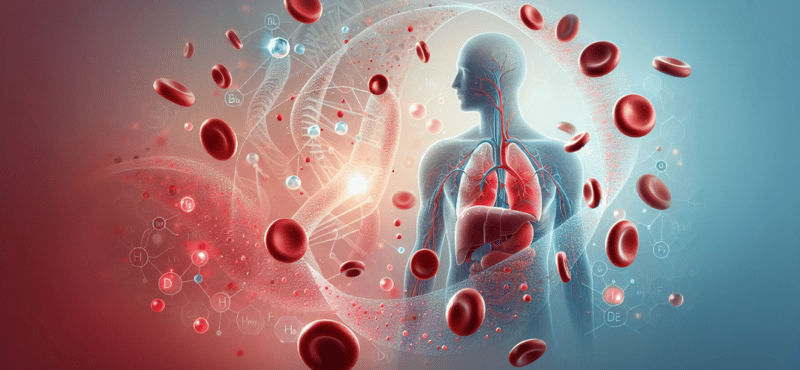
Have you ever wondered why your doctor checks ferritin during a blood test, and what that number actually means for how you feel day to day? Ferritin is one of those quiet but powerful players in your health story, and understanding it a little better can go a long way.
What Is Ferritin, and Why Does It Matter?
Think of ferritin as your body's iron storage system. It is a protein complex that carefully holds onto iron and releases it when your body needs it, keeping levels in just the right balance to support essential functions without letting iron build up to harmful levels. Ferritin is found mainly in the liver, spleen, skeletal muscles, and bone marrow, working quietly in the background to keep things running smoothly.
Why does this matter so much? Because iron is involved in far more than most people realise. Your body depends on it for carrying oxygen through the blood, building DNA, and producing energy at a cellular level. When ferritin levels are off, whether too low or too high, the ripple effects can show up in ways that affect how you feel, think, and move every day.
Ferritin Levels: Indicators of Iron Status
Low Ferritin Levels
Often signify iron deficiency, which can lead to anemia, resulting in fatigue, weakness, shortness of breath, dizziness, hair loss and pale skin. Common causes include lack of dietary intake, poor absorption or blood loss from menstrual period and gastrointestinal tract.
High Ferritin Levels
May be indicative of iron overload disorders, such as hemochromatosis, or can be elevated in the context of inflammation, liver disease, chronic infections or excessive supplementation.

The Impact of Ferritin on Overall Wellness
Maintaining appropriate ferritin levels is essential for overall health and wellness. Iron, stored and carefully regulated by ferritin, is essential for making haemoglobin, the protein in your red blood cells that carries oxygen to every corner of your body. It also forms part of myoglobin, which keeps your muscles supplied with the oxygen they need to function, and supports a range of enzymes that drive important biochemical processes behind the scenes. In short, iron is quietly at work in almost every system that keeps you going.
Strategies for Managing Ferritin Levels
Dietary Adjustments
What you eat and drink can make a real difference when it comes to building up your iron stores.
Focus on including iron-rich foods in your meals, such as red meat, legumes, and fortified cereals. Pairing these with vitamin C-rich foods (think oranges, kiwi, capsicum, or a simple glass of lemon water) is a great habit, as vitamin C actively helps your body absorb iron more efficiently.
On the flip side, tea and coffee, including green tea and matcha, can significantly reduce how much iron your body absorbs. This is not about caffeine; it is down to natural plant compounds called polyphenols (tannins in tea, chlorogenic acid in coffee), which bind to iron in your gut and prevent it from being properly absorbed. The stronger the brew, the greater the effect.
To get the most out of your meals and iron supplements, try to enjoy your tea or coffee at least 2 hours away from iron-rich foods or your supplement dose. Small timing adjustments like this can make a meaningful difference over time.
For high ferritin levels, reducing dietary iron intake might be necessary.
Medical Interventions
Iron supplements or iron infusions may be prescribed to treat low ferritin levels, whereas phlebotomy (regular blood removal) or chelation therapy (medication to remove excess iron) might be used to manage high levels.
Regular Monitoring
Periodic blood tests to monitor ferritin and iron levels are crucial, especially for those with known iron disorders or chronic diseases affecting iron metabolism.
Key Takeaways
Ferritin is much more than a number on a blood test. It plays a central role in how your body stores and uses iron, and when levels are off, it can affect your energy, immunity, and overall wellbeing in ways that are easy to overlook.
The good news is that with a little awareness and some simple lifestyle habits, ferritin levels are very manageable. Regular health screenings can help catch changes early, while a balanced diet gives your body the building blocks it needs to maintain healthy iron stores. Small, consistent steps can go a long way towards feeling your best.


Dr Shiba Poon
- LMCHK
- MBBS (Lond)
- DRCOG
- DCH (RCPCH)
- PGDipClinDerm (Lond)
- MRCGP
- Honorary Clinical Assistant Professor In Family Medicine (HKU)
Health Articles by Dr Shiba Poon



-1.png?width=768&name=%5BMKT%5DWebsite%20Blog%20Photo%20(40)-1.png)



-2.png?width=768&name=%5BMKT%5DWebsite%20Blog%20Photo%20(27)-2.png)

-2.png?width=768&name=%5BMKT%5DWebsite%20Blog%20Photo%20(22)-2.png)
-1.png?width=768&name=%5BMKT%5DWebsite%20Blog%20Photo%20(21)-1.png)

-2.png?width=768&name=%5BMKT%5DWebsite%20Blog%20Photo%20(16)-2.png)

-4.png?width=768&name=%5BMKT%5DWebsite%20Blog%20Photo%20(3)-4.png)

References
- Auerbach, M. and Adamson, J.W. (2016). 'How we diagnose and treat iron deficiency anemia.' American Journal of Hematology, 91(1), pp. 31 to 38. Available at: https://doi.org/10.1002/ajh.24201.
- American Society of Hematology. (2023). 'Iron-deficiency anemia.' Available at: https://www.hematology.org/education/patients/anemia/iron-deficiency [Accessed: 23 June 2026].
- Cook, J.D., Skikne, B.S. and Baynes, R.D. (1993). 'Serum transferrin receptor.' Annual Review of Medicine, 44(1), pp. 63 to 74.
- Grzywacz, A., Lubkowska, A. and Laszczyńska, M. (2020). 'Iron homeostasis and health: understanding its role beyond blood health.' PubMed Central. Available at: https://pmc.ncbi.nlm.nih.gov/articles/PMC12140690 [Accessed: 23 June 2026].
- Kassebaum, N.J. et al. (2014). 'A systematic analysis of global anemia burden from 1990 to 2010.' Blood, 123(5), pp. 615 to 624.
- Moretti, D. et al. (2015). 'Oral iron supplements increase hepcidin and decrease iron absorption from daily or twice-daily doses in iron-depleted young women.' Blood, 126(17), pp. 1981 to 1989.
- Moustarah, F. and Daley, S.F. (2022). 'Dietary iron.' StatPearls. Available at: https://www.ncbi.nlm.nih.gov/books/NBK540969 [Accessed: 23 June 2026].
- Petrova, M. et al. (2021). 'Iron deficiency without anaemia: a diagnosis that matters.' Clinical Medicine, 21(2), pp. 107 to 113. Available at: https://pmc.ncbi.nlm.nih.gov/articles/PMC8002799 [Accessed: 23 June 2026].
- Piskin, E. et al. (2022). 'Iron absorption: factors, limitations, and improvement methods.' ACS Omega, 7(24), pp. 20441 to 20456. Available at: https://doi.org/10.1021/acsomega.2c01833.
- Teucher, B., Olivares, M. and Cori, H. (2004). 'Enhancers of iron absorption: ascorbic acid and other organic acids.' International Journal for Vitamin and Nutrition Research, 74(6), pp. 403 to 419.
- Thankachan, P. et al. (2008). 'Iron absorption in young Indian women: the interaction of iron status with the influence of tea and ascorbic acid.' The American Journal of Clinical Nutrition, 87(4), pp. 881 to 886. Available at: https://ajcn.nutrition.org/article/S0002-9165(23)23557-1/pdf [Accessed: 23 June 2026].
- World Health Organization. (2020). 'Serum ferritin concentrations for the assessment of iron status and iron deficiency in populations: technical brief.' Available at: https://iris.who.int/handle/10665/331505 [Accessed: 23 June 2026].