 Central General Practice
 Repulse Bay
 Clearwater Bay
 BodyWorX Clinic
 Central Specialist Clinic
 MindWorX Clinic
 Family Clinic
 OT&P Annerley Midwives Clinic
 WellWorX Clinic

In the rapidly evolving landscape of medical diagnostics, genetic testing has become a cornerstone of personalised healthcare. Among the most discussed innovations are DNA testing and circulating tumour DNA (ctDNA) testing—two powerful tools that serve distinct purposes in clinical practice. While both involve analysing genetic material, their applications, methodologies, and implications differ significantly.
This blog explores the key differences between DNA and ctDNA testing, their roles in healthcare, and how they are shaping the future of precision medicine.
DNA Testing: The Blueprint of Inherited Risk
DNA testing (or genetic testing) refers to the analysis of an individual's germline DNA, which is inherited from their parents and remains largely unchanged throughout life. Approximately 5 to 10% of cancers are caused by inherited genetic changes. DNA testing is commonly used to:
- Confirm or exclude the presence of a genetic disease
- Assess genetic predisposition to diseases such as breast cancer, colorectal cancer, Huntington’s disease, or cystic fibrosis
- Identify carrier status for inherited conditions
- Guide pharmacogenomic decisions
Samples for DNA testing are typically collected via saliva, blood, or buccal (inner cheek) swabs. The results provide a static snapshot of a person’s genetic makeup, offering insights into potential health risks but not necessarily current disease status.
For example, a BRCA1 mutation identified through DNA testing suggests a higher lifetime risk of breast cancer and ovarian cancer, but it does not confirm the presence of cancer at the time of testing.
Types of DNA tests
Genetic testing examines your genes or chromosomes, which is composed of DNA. Below are some examples:
- Gene testing
- Genomic testing
- Chromosome testing
- Gene expression testing
ctDNA Testing: A Real-Time Window into Cancer
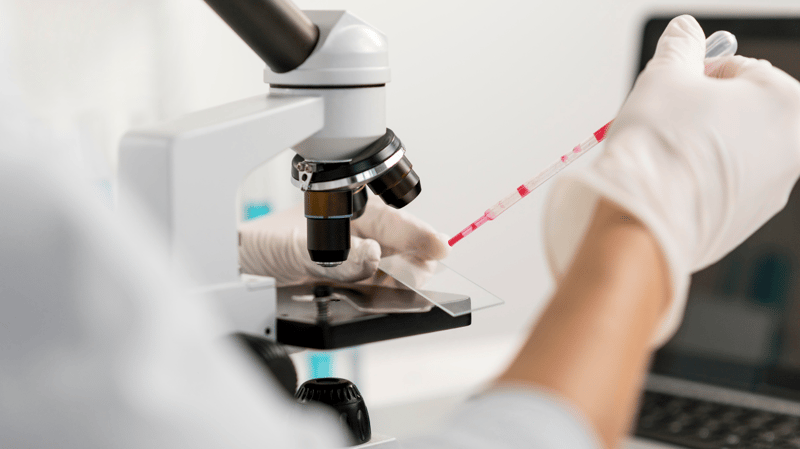
Circulating tumor DNA (ctDNA) testing is a form of liquid biopsy that analyses fragments of DNA shed by tumor cells into the bloodstream. Unlike germline DNA, ctDNA reflects somatic mutations—genetic changes acquired during a person’s life, often due to cancer.
ctDNA liquid biopsy has emerged as a minimally invasive method for:
- Early cancer detection and screening
- Molecular profiling and targeted therapy selection
- Monitoring treatment response
- Assessing minimal residual disease (MRD) and disease relapse
- Detecting resistance mutations
Because ctDNA has a short half-life—less than 2 hours in the circulation—it provides a near real-time snapshot of disease activity. This dynamic quality makes ctDNA especially valuable in oncology, where timely insights can guide treatment decisions and improve outcomes.
OT&P offers Lucence INSIGHT™ Liquid Biopsy Cancer Screening Service, contact us for more information.
Comparing DNA and ctDNA Testing: Key Differences
|
|
DNA Testing |
ctDNA Testing |
|
Source |
Germline DNA |
Tumor-derived DNA |
|
Purpose(s) |
Risk assessment |
Early cancer detection Disease monitoring |
|
Sample Type |
Saliva, blood, buccal swab |
Blood (liquid biopsy) |
|
Timing |
Static |
Dynamic, real-time |
|
Use Case |
Inherited conditions |
Cancer diagnostics |
Which test suits me better?
While DNA testing is insightful for preventive medicine, ctDNA testing is revolutionising real-time cancer care. The two are complementary, not competitive—each serving a unique role in the continuum of care.
Below is a general guide to help determine who may benefit most from DNA testing or ctDNA liquid biopsy:
DNA testing for inherited cancer risk
- Cancer patients
- Blood relatives of a cancer patient
- Anyone interested in assessing the risk of hereditary cancer
CtDNA liquid Biopsy
- Individuals aged 40 years or older
- Individuals with family history of cancer
- Anyone interested in early cancer detection
Consult our GP to determine which testing option is most suitable for you.
A Dual Lens on Health
DNA and ctDNA testing offer two distinct but complementary lenses into human health. DNA testing provides a foundational understanding of inherited risk, while ctDNA testing offers a dynamic view of disease in action—especially in oncology.
Together, they empower clinicians and patients to make more informed, personalised decisions. As accessibility improves and technologies evolve, these tools will play an increasingly central role in precision medicine.
If you’re unsure which option best aligns with your medical profile, consult our GPs at OT&P for personalised advice.

References
- Cleveland Clinic, (2025) ‘DNA Tests & Gene Testing’ Available at: < https://my.clevelandclinic.org/health/diagnostics/23065-dna-test--genetic-testing#test-details> [Accessed: 31 July 2025].
- MedlinePlus, (2025) ‘What is circulating tumor DNA and how is it used to diagnose and manage cancer?’ Available at: < https://medlineplus.gov/genetics/understanding/testing/circulatingtumordna/> [Accessed: 31 July 2025].
- NHS England, (2024) ‘Circulating tumour DNA for cancer patients’ Available at: < https://www.genomicseducation.hee.nhs.uk/genotes/knowledge-hub/circulating-tumour-dna-for-cancer-patients/> [Accessed: 31 July 2025].
- National Cancer Institute, (2024) ‘Genetic Testing for Inherited Cancer Risk’ Available at: <https://www.cancer.gov/about-cancer/causes-prevention/genetics/genetic-testing-fact-sheet> [Accessed: 31 July 2025].
- LucenceInsightTM, (2025) ‘For Patients’ Available at: < https://insight.lucence.com/patients/> [Accessed: 31 July 2025].



.png?length=500&name=%5BMKT%5DWebsite%20Blog%20Photo%20(42).png)