
 Central General Practice
 Repulse Bay
 Clearwater Bay
 BodyWorX Clinic
 Central Specialist Clinic
 MindWorX Clinic
 Family Clinic
 OT&P Annerley Midwives Clinic
 WellWorX Clinic


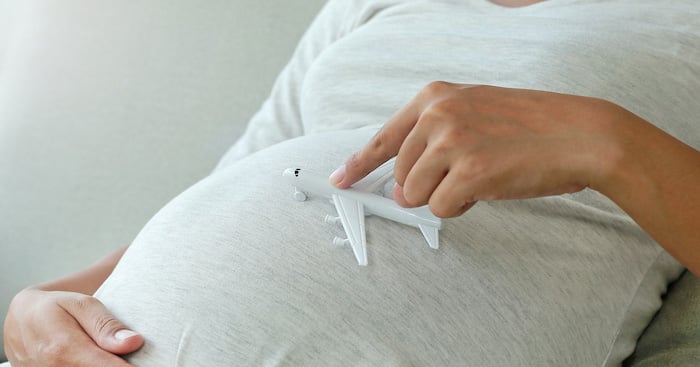
Travelling has now become an integral part of our lives – whether it’s for work, family or a baby-moon, long and short distance air travel has become more accessible and common among pregnant women.
Although very safe, there are some pregnancy and travel-related concerns that you should be aware of. With this in mind, we’ve compiled some information to help make your travels safer and more comfortable.
Should You Travel When Pregnant?
As long as there are no concerns about your pregnancy, you’re generally safe to travel at all times during your pregnancy. Always check with your doctor beforehand, though!
The second trimester is probably the best time to travel while pregnant. This is when morning sickness should settle down, and the belly is not yet big enough to cause major discomfort. Usually, changes in air cabin pressure and in-flight turbulence can increase the risk of discomfort. If you have any concerns, you can also check individual airlines' travel restrictions for pregnant women in advance.
What Are the Risks of Travelling When Pregnant?
Generally, when flying on long-haul flights or sitting for prolonged periods, there’s a risk of pregnant women developing deep vein thrombosis (DVT, 深部靜脈血栓).
What is Deep Vein Thrombosis?
DVT (深部靜脈血栓) is when a blood clot forms in the vein. It’s more common for a clot to develop in the lower limbs, which can become a life-threatening condition if the blood clot ends up in the lungs. DVT can occur in the non-pregnant population, but being pregnant is a risk factor of DVT because blood can get thicker during pregnancy due to physiological changes.
How to Prevent DVT?
By addressing the risk factors for DVT, it can be prevented. Here are some steps you can take when travelling:
- Wear compression stockings on flights and when prolonged immobilisation is anticipated
- Keep well hydrated
- Avoid alcohol and caffeinated drinks
- Stay mobile on planes (stretch exercises every 30 minutes to keep blood flowing)
- Choose an aisle seat if possible when travelling on flights
Some women at high risk of DVT may also need heparin injection which is a blood thinner that lowers the chances of DVT from occurring.
When Should You Avoid Travelling While Pregnant?
In some certain pregnancy conditions, commercial air travel and overseas holidays may be unsafe, and travelling should be avoided if possible. Here are some examples of scenarios where you should avoid travel:
- Recent vaginal bleeding
- High risk of preterm delivery, for example, short cervix
- Severe maternal heart or lung disease
- Placenta Previa
The above list is not exhaustive – please discuss with your doctor if you have concerns or if you’re planning to travel while pregnant.
Other Travel Tips & Advice
When travelling to tropical areas, pregnant women should bring insect repellants to avoid certain insect-borne infections (such as dengue fever or the Zika virus). There are also other safety precautions you can take, such as:
- Wear light-coloured, long-sleeved clothing
- Avoid being outdoors at dawn and dusk
- Apply insect repellent with DEET to exposed body parts and clothing only
- Sleep in beds with mosquito nets if air conditioning is not available
- When applying sunblock, do so before using insect repellent
Other insect repellents that are safe to use in pregnancy and breastfeeding include:
- Picaridin
- Oil of lemon eucalyptus or para-menthane-diol
- IR3535
Additionally, pregnant women should avoid travellers’ diarrhoea by only consuming thoroughly cooked food and drinking pre-packaged chilled drinks (as opposed to ice drinks).

Pregnancy travel help & advice
All-in-all, travelling while pregnant is safe. As long as you take the right precautions and follow your doctor’s advice. If you are looking for more information and advice about travelling while pregnant, please feel free to contact us. At OT&P Healthcare, we have a dedicated team of obstetricians and midwives who can provide pregnancy support – or browse our maternity packages.


Dr Michael Chor
- MBChB (CUHK)
- MRCOG (UK)
- FHKAM(O&G)
- FHKCOG
- Cert RCOG (Maternal and Fetal Med)
.png?width=768&name=%5BMKT%5DWebsite%20Blog%20Photo%20(36).png)
References
- Fradin, M.S. and Day, J.F. (2002). 'Comparative efficacy of insect repellents against mosquito bites.' New England Journal of Medicine, 347(1), pp. 13 to 18. Available at: https://doi.org/10.1056/NEJMoa011699.
- UK Teratology Information Service. (2023). 'Use of insect repellents in pregnancy.' Available at: https://uktis.org/monographs/use-of-insect-repellents-in-pregnancy/ [Accessed: 8 July 2026].
- Oduyebo, T., Petersen, E.E., Rasmussen, S.A. et al. (2016). 'Update: interim guidelines for health care providers caring for pregnant women and women of reproductive age with possible Zika virus exposure, United States, 2016.' Morbidity and Mortality Weekly Report, 65(5), pp. 122 to 127. Available at: https://doi.org/10.15585/mmwr.mm6505e2.
- American College of Obstetricians and Gynecologists. (2022). 'Preventing deep vein thrombosis.' American College of Obstetricians and Gynecologists. Available at: https://www.acog.org/womens-health/faqs/preventing-deep-vein-thrombosis [Accessed: 8 July 2026].




.png?length=500&name=%5BMKT%5DWebsite%20Blog%20Photo%20(36).png)
