 Central General Practice
 Repulse Bay
 Clearwater Bay
 BodyWorX Clinic
 Central Specialist Clinic
 MindWorX Clinic
 Family Clinic
 OT&P Annerley Midwives Clinic
 WellWorX Clinic
In recent years, monkeypox or Mpox as it is currently preferentially termed, has gained attention in the global health landscape. Once considered a rare viral infection confined to specific regions, its recent spread to non-endemic countries has sparked renewed interest and vigilance. In August 2024, Monkeypox in Hong Kong has seen a slight uptick, recording 67 cases amongst which 54 were local and 13 were imported. All patients were male, with epidemiological investigations indicating that most cases involved men who have sex with men (MSM) or bisexual individuals with histories of high-risk sexual behaviors, such as having sex with strangers or engaging in unsafe sex practices.
6 frequently asked questions about monkeypox
What is monkeypox?
Monkeypox is an infectious condition caused by the monkeypox virus. It can be spread when a person comes in contact with the virus from infected animals, infected humans or contaminated materials. Infected wild animals such as rodents, squirrels and some primates can spread monkeypox through biting, scratching, or having direct contact with their body fluids.
How does monkeypox spread?
Monkeypox spreads through direct and indirect contact with an infected person, animal, or contaminated materials.
- Animal-to-human transmission: The virus can spread from infected wild animals, such as rodents, squirrels, and some primates, through bites, scratches, or direct contact with their body fluids, lesions, or respiratory secretions. Handling or consuming undercooked meat from infected animals also poses a risk.
- Human-to-human transmission: Monkeypox spreads through close contact with an infected person’s respiratory droplets, body fluids, or skin lesions. It can also be transmitted through prolonged face-to-face exposure, direct physical contact, or contact with contaminated objects like bedding, clothing, or medical equipment.
- Maternal transmission: Infected mothers can pass the virus to their babies during pregnancy or through close contact after birth.
Is monkeypox curable?
Individuals with Monkeypox typically recover without specific treatment within a few weeks, as patients will manage symptoms like fever and dehydration. In severe cases or for high-risk individuals, antiviral medications may be considered.
The antiviral drug tecovirimat (TPOXX) has been licensed to treat monkeypox, although its availability remains limited. While these treatments can help manage the infection, no universally approved cure exists. Vaccination remains a key strategy for preventing and reducing disease severity.
Why is it suddenly a concern?
In the past, monkeypox outbreaks have been in Central and West Africa. However, recent cases of monkeypox have been reported in Europe, North America and Australia. As of May 21, 2022 the World Health Organization (WHO) confirmed 92 cases of monkeypox and 27 suspected cases of monkeypox in non-endemic countries. Despite no current local cases, the Centre of Health Protection in Hong Kong has urged doctors to be on alert and report any suspected cases.
Monkeypox symptoms: Who is at risk?
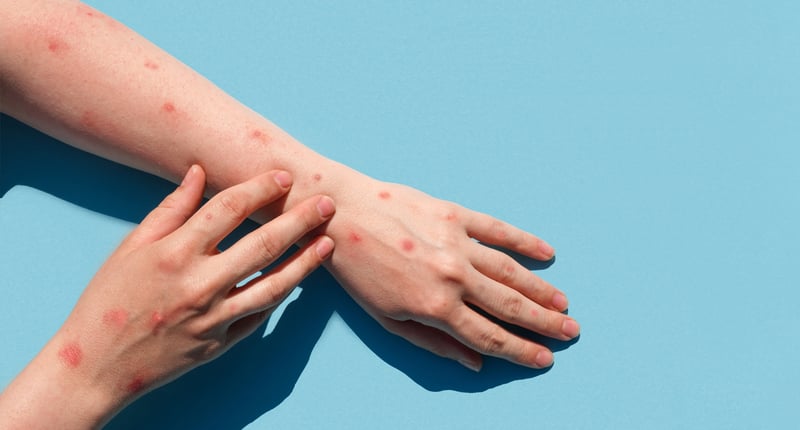
Monkeypox is usually a self-limiting disease. Symptoms can last for 14-21 days. Initially, one may have fever, headache, muscle aches and lymph node swelling. Rash and lesions in the mouth, upper body and genitalia start to appear about 1-3 days after the onset of fever. Diagnosis can be made by testing of specimens such as skin swabs or aspirated lesion fluid of suspected patients.
According to the WHO, health workers and those dealing with animals are at risk of monkeypox. Eating inadequately cooked meat and other animal products of infected animals is a possible risk factor. People living in or near forested areas may have indirect or low-level exposure to infected animals. Transmission may occur to a baby from his/her mother during close contact during or after birth.
Severe cases also occur more commonly among children but can be impacted by the extent of virus exposure, patient’s immune status and nature of complications. Some complications include secondary infections, pneumonia, sepsis, encephalitis and infection of the cornea causing possible loss of vision. The case fatality ratio of monkeypox has varied between 0 and 11 % in the general population and has been higher among young children.
Is there anything we can do to prevent monkeypox?
Raising awareness of risk factors and educating everyone on how they can reduce exposure to the virus is important. Surveillance and rapid identification of new cases is important for containment of any outbreak.
Unprotected contact with wild animals, especially those that are sick or dead, including their meat, blood and other parts must be avoided or done with protection. Additionally, all foods containing animal meat or parts must be thoroughly cooked before eating.
Since monkeypox resembles smallpox, vaccines used during smallpox can also cause protection against monkeypox. Vaccination against smallpox was demonstrated through several observational studies to be about 85% effective in preventing monkeypox. Newer monkeypox vaccines are being developed to specifically prevent monkeypox, but currently the feasibility and appropriateness of mass vaccination for the prevention of monkeypox is still being studied. There is also a licensed antiviral agent (tecovirimat) for the treatment of monkeypox but it is not widely available yet.
As monkeypox (Mpox) spreads beyond its traditional regions, awareness and preventive measures are crucial in controlling outbreaks. While most cases are mild and self-limiting, severe complications can occur, particularly in vulnerable populations. Understanding how the virus spreads, recognising symptoms early, and taking appropriate precautions like avoiding high-risk exposures and considering vaccination for at-risk individuals can help reduce transmission.
Reference
1. Centre for Health Protection, Department of Health - Monkeypox. Centre for Health Protection. (n.d.). Retrieved May 31, 2022, from https://www.chp.gov.hk/en/healthtopics/content/24/101721.html
2. World Health Organization. (n.d.). Monkeypox. World Health Organization. Retrieved May 31, 2022, from https://www.who.int/news-room/fact-sheets/detail/monkeypox

.png?length=500&name=%5BMKT%5DWebsite%20Blog%20Photo%20(44).png)