 Central General Practice
 Repulse Bay
 Clearwater Bay
 BodyWorX Clinic
 Central Specialist Clinic
 MindWorX Clinic
 Family Clinic
 OT&P Annerley Midwives Clinic
 WellWorX Clinic


The colour, shape, and texture of stool are vital indicators of overall health. In a fast-paced city like Hong Kong, where many people often overlook their bowel health due to busy schedules, stool appearance can reveal a lot about dietary habits, digestive health, and even potential illnesses. Particularly with Hong Kong’s love for fried food, roasted meats, and high-fat milk teas, paying attention to stool changes is essential. This article explores what stool colour and shape say about your health, when to be concerned, and when to seek medical advice.
Normal Stool Colour and Shape
Healthy stool is typically medium to dark brown, thanks to the breakdown of bilirubin in bile during digestion. A normal stool should also be smooth, sausage-shaped, and easy to pass, reflecting good digestion and bowel function.
Characteristics of Healthy Stool:
- Colour: Medium to dark brown.
- Shape: Sausage-shaped with a smooth surface.
- Texture: Soft but firm, easy to pass.
- Frequency: Between three times a day to three times a week is considered normal.
- Odour: It should smell unpleasant but not excessively foul.
Causes of Stool Colour Changes
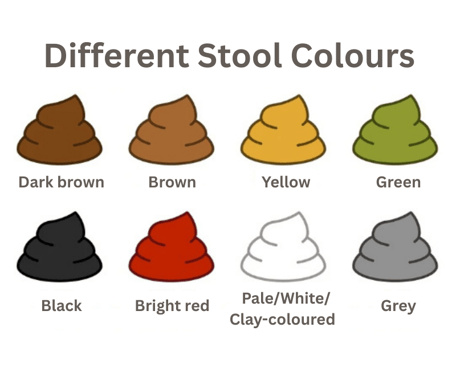
Occasionally, stool colour may change due to diet. However, persistent abnormal colours may signal underlying health problems. Below are common stool colours, their potential causes, and when to worry:
Green stool
Possible cause:
- Diet high in green vegetables (e.g., spinach, kale)
- Iron supplements
- Food passing through the intestines too quickly (e.g., diarrhoea), preventing bile from fully breaking down
When to be concerned:
- If accompanied by diarrhoea, it may indicate digestive issues
Yellow Stool
Possible cause:
- Undigested fat, possibly linked to gallbladder or pancreas function
- Greasy, butter-like stool with foul odour may signal malabsorption (e.g., coeliac disease, pancreatic disorders, parasites)
- Consuming high-fat foods (e.g., fried foods)
- Eating gluten-containing foods (e.g., bread, grains)
When to be concerned:
- If greasy yellow stool persists, consult a doctor
Pale/White/Clay-coloured Stool
Possible cause:
- Lack of bile, possibly due to bile duct blockage (e.g., gallstones) or liver disease (e.g., hepatitis)
- Certain medications, such as antacids with aluminium hydroxide, high doses of bismuth subsalicylate (e.g., Pepto-Bismol), antidiarrheal drugs, or barium used in X-rays
When to be concerned:
This signals potential liver, or bile obstruction issues (either benign or malignant) and requires immediate medical attentionBlack Stool
Possible cause:
- Consuming dark-coloured foods (e.g., black licorice, blueberries, dark chocolate)
- Taking iron supplements or bismuth subsalicylate (e.g., Kaopectate, Pepto-Bismol)
- Black, tarry stool (like tar) may indicate upper gastrointestinal bleeding (e.g., stomach ulcers or oesophageal varices)
When to be concerned:
- If unexplained by diet or medication, seek medical attention immediately.
Bright Red Stool
Possible cause:
- Eating food with red colouring or red foods (e.g., beetroot, cranberries)
- If the red source is blood, it may indicate lower intestinal bleeding, haemorrhoids, polyps, or colorectal/rectal bleeding
When to be concerned:
- If red stool persists, especially with other symptoms like abdominal pain or weight loss, seek medical advice promptly.
Orange Stool
Possible cause:
- Consuming foods rich in beta carotene (e.g., carrots, pumpkin, sweet potatoes)
- Certain medications, such as antibiotics, rifampicin or antacids containing aluminium hydroxide
When to be concerned:
- Rarely, it may result from liver issues reducing bile production or causing bile blockage. Usually, such cases present pale or clay-coloured stool. In the absence of identifiable dietary or pharmacological factors, it is advisable to seek medical consultation.
Stool Shape and Associated Health
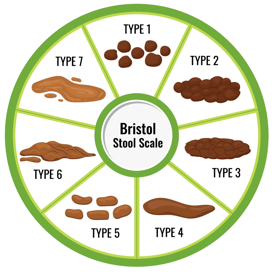
The Bristol Stool Chart categorises stool into seven types. Types 3 and 4 (smooth sausage-like or snake-like stools) are considered the healthiest.
Bristol Stool Chart:
- Type 1: Hard, nut-like lumps; difficult to pass – Indicates severe constipation.
- Type 2: Sausage-shaped but lumpy – Suggests mild constipation.
- Type 3: Sausage-shaped with cracks on the surface – Healthy.
- Type 4: Smooth, soft sausage or snake-like – Healthy.
- Type 5: Soft blobs with clear edges – May be normal but has more water content.
- Type 6: Mushy with ragged edges – Indicates mild diarrhoea.
- Type 7: Completely liquid with no solid parts – Severe diarrhoea; seek medical attention.
When to Seek Medical Attention for Stool Changes
Seek medical advice immediately if you experience any of the following:
- Black stool with no clear dietary or medication cause.
- Blood in stool or red stool.
- Persistent yellow, white, or grey (“ashen”) stool.
- Frequent diarrhoea or constipation lasting over a few weeks.
- Stool that becomes narrow (pencil-shaped or ribbon-like) or shows significant shape/size changes.
- Accompanying symptoms such as weight loss, abdominal pain, fever, pallor/paleness or vomiting.
Common Questions About Stool Colour
Is black stool a warning sign?
If caused by food (e.g., licorice, iron supplements) or medications (e.g., bismuth-based drugs), it’s usually harmless. However, tarry black stool with a foul odour may indicate upper gastrointestinal bleeding and requires urgent medical evaluation.
What causes dark green stool?
Common causes include eating green vegetables, food colouring, or iron supplements. Green stool also occurs during diarrhoea when bile isn’t fully broken down. If persistent with symptoms like abdominal pain or fever, consult a doctor.
How can stool indicate colorectal cancer?
Colorectal cancer may cause stool changes such as blood in stool (bright red, dark red, maroon, or tar-like black). Tumours near the rectum may cause bright red blood, while higher-up tumours may cause dark or black stool. Any persistent changes should prompt medical evaluation.
Is yellow stool normal?
Yellow stool may result from diet (e.g., high-fat or naturally coloured foods). Greasy, foul-smelling yellow stool often signals fat malabsorption, linked to gallbladder or pancreas issues or parasitic conditions. If accompanied by other symptoms (e.g., weight loss, abdominal pain), seek medical advice.
Conclusion
The colour and shape of stool provide valuable insights into your health. While most stool changes are diet-related, persistent or unexplained changes accompanied by other symptoms should prompt timely medical consultation. Regular observation of stool health can help maintain digestive health and detect potential issues early.

Read More
References
- Mayo Clinic, (2024) Stool Color: When to Worry. Retrieved 10 January 2025 from https://www.mayoclinic.org/stool-color/expert-answers/faq-20058080.
- WebMD, (2024) What Do Different Poop Colors Mean?. Retrieved 10 January 2025 from https://www.webmd.com/digestive-disorders/what-do-different-poop-colors-mean.
- MedicineNet, (2024) Stool Color Changes. Retrieved 10 January 2025 from https://www.medicinenet.com/stool_color_changes/article.htm.
- American Cancer Society, (2024) Colorectal Cancer Signs and Symptoms. Retrieved 10 January 2025 from https://www.cancer.org/cancer/types/colon-rectal-cancer/detection-diagnosis-staging/signs-and-symptoms.html.
- Verywell Health, (2023) Colon Cancer and Poop: Signs to Watch For. Retrieved 10 January 2025 from https://www.verywellhealth.com/colon-cancer-and-poop-signs-to-watch-for-5094615.


-2.png?length=500&name=%5BMKT%5DWebsite%20Blog%20Photo%20(33)-2.png)