 Central General Practice
 Repulse Bay
 Clearwater Bay
 BodyWorX Clinic
 Central Specialist Clinic
 MindWorX Clinic
 Family Clinic
 OT&P Annerley Midwives Clinic
 WellWorX Clinic

In modern medical imaging, contrast agents play a crucial role. They assist doctors in visualising abnormalities within the body more clearly, enabling more accurate diagnoses. Whether it’s X-ray, computed tomography (CT), magnetic resonance imaging (MRI), or ultrasound, contrast agents are essential aids. However, many people still have questions about the uses, types, and safety of contrast agents. This article aims to give you a thorough understanding, so you can feel more reassured during examination.
What Are Contrast Agents?
Contrast agents are substances specifically used in medical imaging, such as X-rays, CT scans, and MRI. They increase the contrast between the target tissue and surrounding tissues, allowing clinicians to identify abnormalities or lesions more clearly. For example, tumours, blockage of blood vessels, or structural abnormalities of organs can be detected more easily with the help of contrast agents.
The Role of Contrast Agents in Medical Imaging
- Improving diagnostic accuracy
- Facilitating early disease detection
- Aiding the development of treatment plans
- Monitoring disease progression
Forms of Contrast Agents
Contrast agents come in various forms, including:- Oral contrast agents: e.g. barium sulphate.
- Intravenous injection: e.g. iodine-based and gadolinium-based agents.
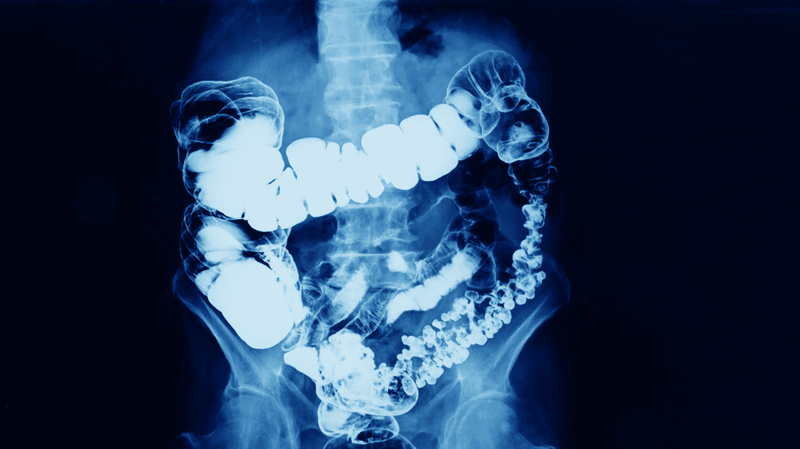
- Enemas for rectal administration: e.g. barium sulphate.
- Spinal injection: e.g. non-ionic iodine-based contrast agents.
- Gases (known as negative contrast agents): air, carbon dioxide, nitrous oxide.
What are the different contrast agents used for different medical imaging?
- Iodine-based agents: Mainly used for X-rays and CT scans.
- Gadolinium-based agents: Used for MRI.
- Microbubble agents: Used for ultrasound.
- Barium sulphate: Commonly used for gastrointestinal X-rays and CT scans.
- Carbon dioxide: Mostly limited for patients with contraindications to iodinated contrast agents or with kidney disease.
Common Side Effects of Contrast Agents
Although contrast agents are generally safe, they may occasionally cause side effects:
1. Barium Sulphate
- Mild reactions: stomach cramps, diarrhoea, nausea, constipation.
- Severe reactions: hives, difficulty breathing, rapid heartbeat, swelling of the throat, bluish skin.
2. Iodine-Based Agents
- Mild to moderate reactions: headache, nausea, vomiting, abnormal heart rhythms, skin rash, high or low blood pressure.
- Severe reactions: difficulty breathing, swelling of the throat, profound hypotension.
3. Gadolinium-Based Agents
Generally less likely to cause allergic reactions than iodine-based agents.
- Mild reactions: hives, itchy eyes.
- Severe reactions: nephrogenic systemic fibrosis.
If your symptoms persist or worsen, please inform your healthcare team immediately.
4. Gases-based agents
- No adverse effects on the kidneys or immune system.
- Risk of air embolism.
- Mild to moderate reaction: paraesthesia, tenesmus, or nausea.
Frequently Asked Questions About Contrast Agents
1. Are There Any Contraindications for Contrast Agents?
Before administering a contrast agent, your doctor will assess your health. The following conditions may make use of contrast agent unsuitable:
- Severe allergy history: Those who have previously had severe allergic reactions to contrast agents should avoid.
- Severe renal impairment: Especially with gadolinium-based agents, which may trigger nephrogenic systemic fibrosis.
- Pregnancy: While some contrast agents may not affect the foetus, unnecessary use should be avoided.
- Thyroid disorders: Iodine-based agents can affect thyroid function, so prior evaluation is recommended.
- Carbon dioxide: not for use with nitrous oxide sedation (mixes with N2 and reduces solubility of CO2 in blood); not for use for imaging above the diaphragm (increased risk of air embolism leading to stroke or death).
2. How long does it take for contrast agents to excrete?
Most contrast agents are excreted through the kidneys in urine within 24 hours. Carbon dioxide contrast is absorbed by the blood and is readily exhaled through the lungs.
3. What should I do before and after receiving a contrast agent?
- Before the scan: Inform your doctor about any allergies, kidney problems, and whether you are pregnant.
- After the scan: Drink plenty of water to help eliminate the contrast agent from your body. Report any unusual symptoms to medical staff promptly.
Summary
Contrast agents significantly enhance the effectiveness of medical imaging, enabling earlier and more accurate diagnoses. While generally safe, side effects do occasionally occur. If you have any concerns, consult your doctor before your examination to ensure a safe and smooth experience.

References
- RadiologyInfo.org. (2024). ‘Contrast Materials’ Available at: <https://www.radiologyinfo.org/en/info/safety-contrast> [Accessed 16 June 2025].
- How Radiology Works. (n.d.). ‘Contrast Agents (Radiographic contrast agents and iodinated contrast media)’ Available at: <https://howradiologyworks.com/contrast-agents-radiographic-contrast-agents-and-iodinated-contrast-media/> [Accessed 16 June 2025].
- Najjar, R. (2024). Clinical applications, safety profiles, and future developments of contrast agents in modern radiology: A comprehensive review. iRadiology, 2(5).
- Radiopaedia.org. (2024). ‘Iodinated contrast-induced thyrotoxicosis’ Available at: <https://radiopaedia.org/articles/iodinated-contrast-induced-thyrotoxicosis> [Accessed 16 June 2025].
- Van der Molen AJ, et al., (2023). Waiting times between examinations with intravascularly administered contrast media: a review of contrast media pharmacokinetics and updated ESUR Contrast Media Safety Committee guidelines. European Radiology, 34(4):2512-2523.
- Michael Young & Jay Mohan (2025). Carbon Dioxide Angiography. StatPearls, National Library of Medicine, National Center for Biotechnology Information. Available at: <https://www.ncbi.nlm.nih.gov/books/NBK534244/> [Accessed: 03 July 2025].


.png?length=500&name=%5BMKT%5DWebsite%20Blog%20Photo%20(42).png)