
 Central General Practice
 Repulse Bay
 Clearwater Bay
 BodyWorX Clinic
 Central Specialist Clinic
 MindWorX Clinic
 Family Clinic
 OT&P Annerley Midwives Clinic
 WellWorX Clinic


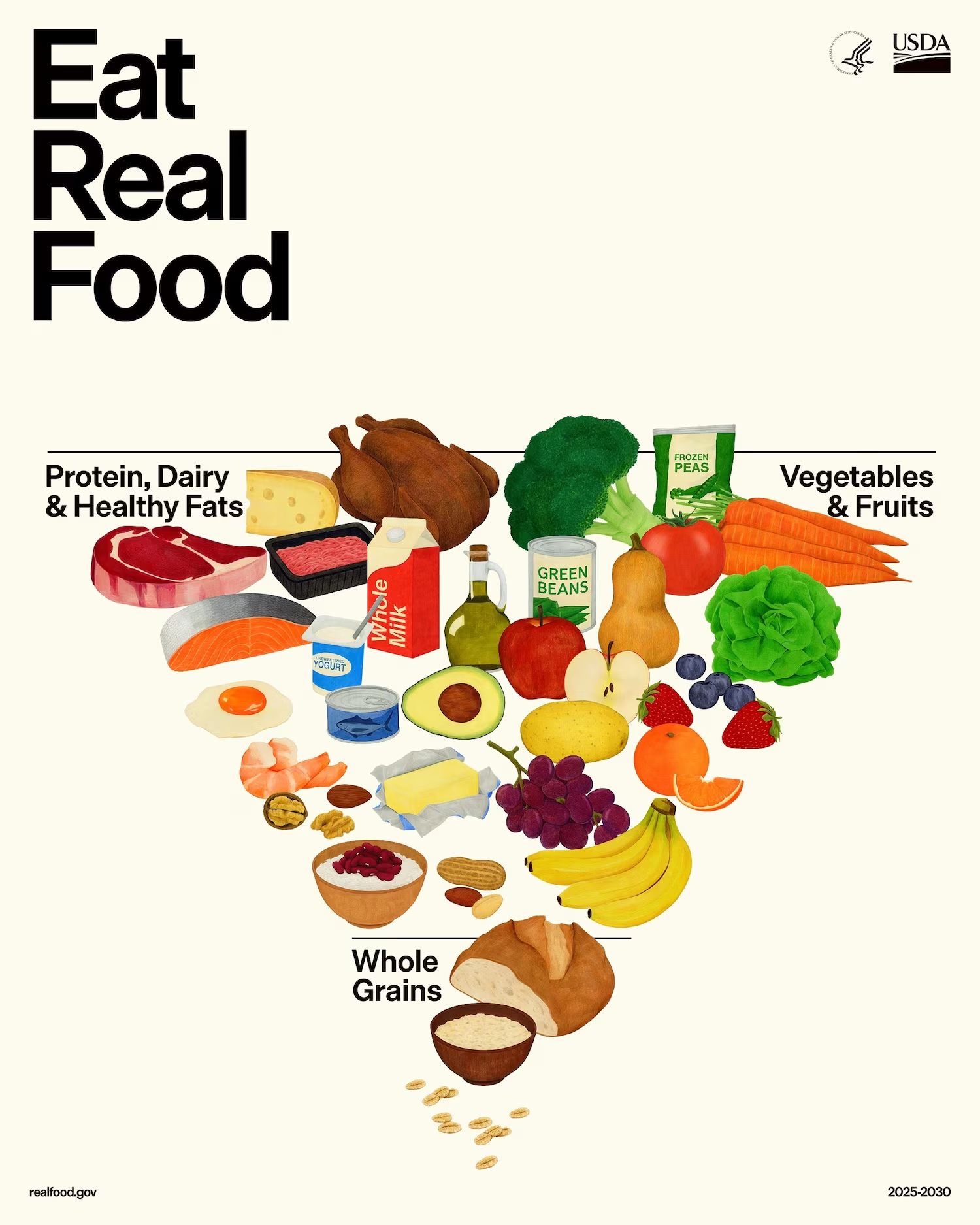 For decades, the traditional food pyramid encouraged us to base our diets on grains and carbohydrates. That long‑standing model has now been turned on its head with the recent release of the 2025–2030 Dietary Guidelines Pyramid by the United States, and the significance of this change cannot be overstated.
This updated food pyramid represents a fundamental rethink of nutritional priorities and aligns closely with modern low‑carbohydrate and metabolic health principles.
A Radical Shift in Nutrition Policy
The new food pyramid places protein and healthy fats at the foundation, while refined carbs and processed foods are pushed to the very top, to be consumed sparingly. Vegetables, fruits, and whole foods are emphasised as the true staples of health. This isn’t just a minor update, it’s a complete rethinking of what “balanced eating” means.
Meat and Protein Elevated
- Meat is no longer vilified: The guidelines encourage higher protein intake, including meats, poultry, fish, and eggs.
- Protein as foundation: Rather than grains, protein now forms the base of the new food pyramid, reflecting its role in satiety, muscle maintenance, and metabolic stability.
- Red meat reconsidered: While moderation is still advised, red meat is acknowledged as nutrient-dense, providing iron, zinc, and B vitamins.
Saturated Fats Reframed
- Full-fat dairy endorsed: The guidelines explicitly recommend full-fat dairy products, a departure from decades of “low-fat” advice.
- Balanced view of fats: Saturated fats are no longer treated as universally harmful. Instead, the emphasis is on quality sources (like dairy, meat, and coconut oil) while discouraging industrial trans fats and processed oils.
- Healthy fats prioritised: Olive oil, nuts, seeds, and avocados are highlighted as daily staples.
Carbohydrates Demoted
- Refined grains minimised: Once the base of the food pyramid, refined carbs are now at the top, to be consumed sparingly.
- Sugar reduction: Added sugars are strongly discouraged, with clear limits set for both adults and children.
- Whole-food carbs only: Vegetables, fruits, and whole grains are the preferred carbohydrate sources.
Why This Fits Perfectly with Low-Carb Living
I’ve been promoting and advising a low-carb lifestyle to clients for more than a decade, and I can honestly say this new guideline feels like a long-awaited validation. For years, I’ve had to explain why cutting back on carbs and focusing on protein and fat makes sense for metabolic health. Now, the official food pyramid itself reflects that very principle.
This shift will make my work much easier, because clients can now see that the science, and the guidelines, support what I’ve been teaching all along.
The Influence of Dr. Ben Bikman
One of the advisers to the new guidelines is Dr. Ben Bikman, a renowned researcher specialising in insulin resistance. His work highlights how chronically elevated insulin contributes to:
- Obesity
- Type 2 diabetes
- Cardiovascular disease
- Neurodegenerative conditions
By placing insulin resistance at the center of dietary policy, the guidelines reflect a deeper understanding of modern disease. Dr. Bikman’s influence ensures that the food pyramid is not just a political statement but a science-backed framework for metabolic health.
Why This Is a Big Deal
- It overturns decades of carb-heavy advice.
- It empowers people to embrace low-carb eating without hesitation.
- It signals a cultural and scientific shift toward metabolic health.
Final Thoughts
I’ve seen firsthand how a low-carb lifestyle can restore energy, stabilise blood sugar, and improve overall health. With the 2025–2030 Dietary Guidelines Pyramid now reflecting these principles, and with experts like Dr. Ben Bikman guiding the way, I feel more confident than ever in helping clients embrace this change. This isn’t just a new chart, it’s a revolution in how we think about food, health, and disease prevention.

Oliver Smith
- Diploma of Clinical Hypnotherapy(Australian Academy of Hypnosis)
- Registered Associate of Australian Hypnosis Alliance
- Professional Cognitive Behavioral Therapy (CBT) Diploma
- Cognitive Behavioral Therapy (CBT) for Food Disorders
- Post Grad Module of Psychobiology & Neuroscience (University of Essex - UK)
- Post Grad Diploma in Clinical Nutrition
- Professional Training in Ketogenic Diet Nutrition & Treatment(Nutrition Network)
- Diabetes Reversal Training (Nutrition Network)
Health Articles by Oliver Smith
.png?width=768&name=%5BMKT%5DWebsite%20Blog%20Photo%20(42).png)
.png?width=768&name=%5BMKT%5DWebsite%20Blog%20Photo%20(39).png)









Read more
References
- The Ferr (2024). Sugars and brain inflammation. [Online] Available at: https://www.frontiersin.org/journals/molecular-neuroscience/articles/10.3389/fnmol.2021.732120/full [Accessed 27 April 2024].
- Stanford News (2025). Keto diet therapy for mental illness: new research. [Online] Available at: https://news.stanford.edu/stories/2025/04/keto-diet-therapy-mental-illness-research [Accessed 27 April 2024].
- Frontiers in Molecular Neuroscience (2021). [Online] Available at:https://www.frontiersin.org/journals/molecular-neuroscience/articles/10.3389/fnmol.2021.732120/full [Accessed 27 April 2024].
- MDPI (2023). Nutrients, 17(7), p.1268. [Online] Available at: https://www.mdpi.com/2072-6643/17/7/1268 [Accessed 27 April 2024].
- MDPI (2023). Cells, 13(21), p.1791. [Online] Available at: https://www.mdpi.com/2073-4409/13/21/1791 [Accessed 27 April 2024].
- MDPI (2023). Nutrients, 17(13), p.2216. [Online] Available at: https://www.mdpi.com/2072-6643/17/13/2216 [Accessed 27 April 2024].
- HealthMatch (2024). Vitamin D for seasonal depression. [Online] Available at:
https://healthmatch.io/seasonal-affective-disorder/vitamin-d-for-seasonal-depression [Accessed 27 April 2024]. - SpringerLink (2023). [Online] Available at: https://link.springer.com/article/10.1007/s00210-023-02762-5 [Accessed 27 April 2024].
- MDPI (2023). Nutrients, 15(11), p.2525. [Online] Available at: https://www.mdpi.com/2072-6643/15/11/2525 [Accessed 27 April 2024].




.png?length=500&name=%5BMKT%5DWebsite%20Blog%20Photo%20(42).png)
