 Central General Practice
 Repulse Bay
 Clearwater Bay
 BodyWorX Clinic
 Central Specialist Clinic
 MindWorX Clinic
 Family Clinic
 OT&P Annerley Midwives Clinic
 WellWorX Clinic

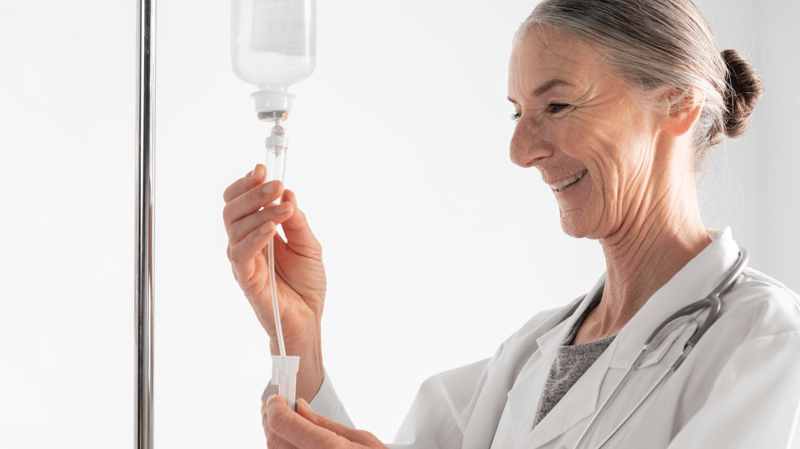
Intravenous infusion delivers medications or nutritional fluids directly into the bloodstream, allowing for quick distribution and effective treatment. For cancer patients, intravenous infusion therapy is not only the primary route for chemotherapy drug administration, but it is also commonly used for nutritional supplementation and for reducing side effects. This article will introduce the basic concepts of intravenous injection, its clinical applications, advantages, and potential side effects, as well as its role in chemotherapy.
What is Intravenous Injection?
Intravenous injection (IV drips), also known as the parenteral route, refers to the process of administering fluids, electrolytes, nutrients, or drugs directly into a patient's vein. This method enables rapid distribution of medications or nutrients throughout the body without going through the gut.
Applications of Intravenous Injection
Intravenous infusion is commonly used in the following medical or healthcare situations:
- Administering medications that require rapid onset of action (e.g., medications for suppressing severe allergies, uncontrolled hypertension and cardiac arrest)
- Chemotherapy
- Fluid and electrolyte replenishment
- Nutritional support
Advantages of Intravenous Injection
In addition to providing rapid drug action, intravenous injections have a bioavailability of up to 90% or more, making it easier for the body to absorb compared to oral medications. In addition, it is particularly beneficial for patients who cannot eat normally, experience severe nausea and vomiting, have a non-functioning gut or are unable to swallow pills.
Are There Side Effects of Intravenous Injections?
The side effects of intravenous therapy largely depend on the specific medications or fluids used. Most individuals experience little to no side effects, or any side effects may be mild. Common side effects can include pain or swelling at the injection site.
If you experience any of the following symptoms after injection, please inform your primary physician immediately:
- Allergic reactions: such as rash, hives (urticaria), itching, skin redness, blisters, or peeling; wheezing; tightness in the chest or throat; difficulty breathing, swallowing, or speaking; hoarseness; or swelling of the mouth, face, lips, tongue, or throat.
- Fluid and electrolyte imbalance: mood changes, confusion, muscle pain or weakness, irregular heartbeats, severe dizziness, increased thirst, seizures, changes in urination, dry mouth, dry eyes, or severe stomach discomfort.
- Skin infections: skin exudation, fever, swelling, redness, or pain.
- Chest pain or tightness.
- Swelling, excessive warmth, numbness, or discolouration in the limbs.
Understanding Chemotherapy
Chemotherapy is a treatment that uses drugs to kill or inhibit the growth of cancer cells, applicable to various types of cancer. It is often combined with other cancer treatments to enhance effectiveness.
Methods of Administering Chemotherapy
Chemotherapy can be administered in several ways, with intravenous injection being the most common. Other methods include:
- Intravenous infusion: directly injecting the medication into a vein.
- Oral administration: taken in pill, capsule, or liquid form.
- Intramuscular or subcutaneous injection: injected into the muscle of the arm, thigh, or buttocks, or into the fatty tissue of the arm, leg, or abdomen.
- Intrathecal administration: injecting medication into the cerebrospinal fluid in the space surrounding the brain and spinal cord.
- Intraperitoneal administration: infusing medication into the peritoneal (abdominal) cavity.
- Intra-arterial infusion: administering medication directly into the artery leading to the tumour.
- Topical treatment: applying ointments, gels, lotions or transdermal patches to the affected area via the skin.
Common Questions About Chemotherapy
1. How long does a chemotherapy session take? How long does recovery take?
The duration depends on the method of administration. Typically, intramuscular/subcutaneous injections can be completed in minutes, while intravenous infusions may take from 30 minutes to several days. Chemotherapy is usually conducted in cycles, including treatment and rest periods, allowing the body to regenerate healthy cells and recover before the next session. Hence, recovery times vary among individuals and treatment protocols.
2. What are common side effects of chemotherapy?
Common side effects include fatigue, nausea and vomiting, oral mucositis, increased susceptibility to infections, easier bruising or bleeding, fatigue from anaemia, shortness of breath and palpitations, temporary hair loss, constipation or diarrhea, and numbness or tingling in the hands and feet.
3. Are there dietary restrictions during chemotherapy? What dietary recommendations exist?
On treatment days it is recommended to eat light meals, eating smaller portions more frequently. Avoid fasting and steer clear of greasy or spicy foods.
Conclusion
Intravenous injection has a wide range of applications, from basic nutritional and electrolyte replenishment to chemotherapy and medicinal treatments, taking advantage of its rapid and more direct effects. Like any treatment, intravenous injections have side effects. If you have any questions about intravenous injections or therapy as a whole, please feel free to reach out to us.

References
- National Cancer Institute, (2024) Intravenous Vitamin C (PDQ®)–Patient Version. Retrieved 20 June 2025 from https://www.cancer.gov/about-cancer/treatment/cam/patient/vitamin-c-pdq
- National Library of Medicine, (2023) Nursing Advanced Skills [Internet]. Retrieved 20 June 2025 from https://www.ncbi.nlm.nih.gov/books/NBK594499/
- Drugs.com, (2024) Intravenous (IV) Fluids. Retrieved 20 June 2025 from https://www.drugs.com/cdi/intravenous-iv-fluids.html
- National Health Service, (2025) Chemotherapy. Retrieved 20 June 2025 from https://www.nhs.uk/tests-and-treatments/chemotherapy/
- National Library of Medicine, (2023) Medication Routes of Administration. Retrieved 20 June 2025 from https://www.ncbi.nlm.nih.gov/books/NBK568677/
- Standford Medicine, (n.d.) Nutrition Services for Cancer Patients. Retrieved 20 June 2025 from https://stanfordhealthcare.org/medical-clinics/cancer-nutrition-services/during-cancer-treatment/nutrition-during-chemo.html