 Central General Practice
 Repulse Bay
 Clearwater Bay
 BodyWorX Clinic
 Central Specialist Clinic
 MindWorX Clinic
 Family Clinic
 OT&P Annerley Midwives Clinic
 WellWorX Clinic

-2.png?width=800&name=%5BMKT%5DWebsite%20Blog%20Photo%20(35)-2.png)
Salmonella is a group of bacteria that cause food poisoning (salmonellosis), usually through contaminated food such as raw eggs, poultry, and unpasteurised dairy. Most healthy people recover in 4 to 7 days without specific treatment, but babies, older adults, and people with weakened immune systems are at higher risk of serious illness.
This guide focuses on non-typhoidal Salmonella, the common food-poisoning type, rather than the strains that cause typhoid fever. Although Salmonella rarely draws attention until an outbreak reaches the news, it remains one of the most common causes of foodborne illness worldwide, with non-typhoidal Salmonella alone estimated to cause around 93.8 million cases of gastroenteritis and roughly 150,000 deaths each year.1
At OT&P in Hong Kong, we see foodborne illness regularly, particularly during the warmer months, and this guide explains what Salmonella is, who is most at risk, and how to protect your family.
What Is Salmonella and How does it spread?
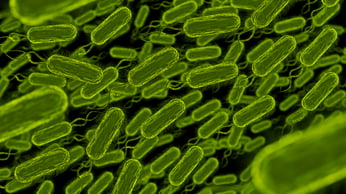
Salmonella spreads mainly through contaminated food and poor hand hygiene, such as not washing hands after handling raw food or before eating. The bacteria live in the intestines of animals, most notably poultry, livestock, and reptiles, and reach people when these germs get into food or the mouth.
Common sources of Salmonella food poisoning include:
-
Raw meat, poultry and seafood
-
Raw or undercooked eggs
-
Unpasteurised dairy products
-
Contaminated Fruits and Vegetables (e.g. salad)
-
Improperly handled or stored food
Outbreaks are frequently traced back to desserts and homemade foods prepared with raw or unpasteurised eggs, such as mayonnaise and hollandaise sauce, which are often paired with salads. Salmonella consistently ranks among the leading causes of reported food poisoning outbreaks, and because it thrives in warm conditions, cases tend to rise during the summer months.
What are the symptoms of salmonella food poisoning?
Salmonella symptoms usually appear 6 hours to 6 days after eating contaminated food. Symptoms commonly include:
-
Diarrhoea, which is occasionally bloody
-
Fever
-
Abdominal cramps
-
Nausea
-
Vomiting
When should you see a doctor?
Most cases settle on their own, but you should seek medical care if symptoms worsen, for example when:
-
A fever is high or persistent
-
There are signs of dehydration
-
There is blood in the stool
-
Symptoms continue beyond a few days
These signs can indicate a more serious infection that has spread beyond the gut.
| Symptoms | Typical mild case | Warning signs (Seek care) |
| Fever | Mild and brief | High or persistent |
| Diarrhoea | Eases within 1 to 3 days | Bloody, or lasting 3+ days |
| Dehydration | Maintained with fluids | Dizziness, dry mouth, low urine output |
Is Salmonella Infection different in babies and young children?
Yes. Infants are the age group most often affected, and the infection can look different in a small child than in an adult.
A rising trend
Infants have the highest incidence of any age group, and rates have been climbing gradually since the mid-2000s.2 Locally, non-typhoidal Salmonella drives a large share of paediatric admissions.3
Symptoms to watch for
Babies may not show the classic cramps and diarrhoea, so look out for:
-
Fever, irritability, or unusual drowsiness
-
Poor feeding, vomiting, or diarrhoea that is sometimes bloody
-
Signs of dehydration, such as fewer wet nappies or a dry mouth and lethargy
Why it matters more in babies
Most infant cases are gastroenteritis that settles with fluids and rest, but a small minority spread beyond the gut to the bloodstream, or, rarely, the nervous system, and children under three are most at risk.4,5 Because their immune systems are still developing and breastfeeding appears protective, bottle-fed infants carry somewhat higher risk. Any baby with a fever and persistent diarrhoea should be seen promptly by a doctor.

How to treat Salmonella infection?
Most healthy people need no specific treatment, because the body clears the infection on its own within a few days.6 Rest and good hydration are the main goals of recovery, and replacing fluids matters most while diarrhoea lasts, since dehydration is the main risk to watch for.
For more severe illness, additional support is recommended, of which can include:
-
Oral rehydration salts
-
Anti-diarrhoeal medication, but only on a doctor’s advice, and not when there is fever, bloody, diarrhoea, or diarrhoea lasting more than three days, as it can prolong the illness
-
Antibiotics, but only in the specific circumstances described below
As some Salmonella strains become increasingly resistant to antibiotics, doctors now reserve antibiotics for severe or high-risk cases.7 Antibiotics may be recommended for people who:
-
Are severely ill
-
Have a weakened immune system
-
Have certain underlying conditions, such as sickle cell disease
How can you prevent Salmonella infection?
There is currently no routine vaccine for the most common, non-typhoidal types of Salmonella, so prevention continues to rest on safe food handling and good hand hygiene.
Prevention rests on a handful of straightforward food-safety habits. These simple measures can significantly reduce the risk of Salmonella infection and help protect your family:
-
Cooking poultry and eggs thoroughly
-
Avoiding dishes made with raw or unpasteurised eggs
-
Refrigerating perishables promptly
-
Keeping raw and cooked foods separate, with separate preparations
-
Washing hands and surfaces after handling raw meat
Salmonella Food Poisoning: FAQ
Key takeaways
-
Salmonella causes food poisoning, most often from consuming raw eggs, poultry, and unpasteurised dairy.
-
Symptoms appear 6 hours to 6 days after exposure and usually clear in 4 to 7 days.
-
Most people recover with rest and fluids; antibiotics are reserved for severe, complicated or high-risk cases.
-
Babies under three are the group most at risk of serious, invasive infection.
-
It can spread from person to person, so handwashing is essential.
References
- Gong, B., Li, H., Feng, Y., Zeng, S., Zhuo, Z., Luo, J., Chen, X. and Li, X. (2022) 'Prevalence, serotype distribution and antimicrobial resistance of non-typhoidal Salmonella in hospitalized patients in Conghua District of Guangzhou, China', Frontiers in Cellular and Infection Microbiology, 12, 805384. doi: 10.3389/fcimb.2022.805384.
- AAP News (2023) Salmonella infections among infants gradually rising. American Academy of Pediatrics. Available at: https://publications.aap.org/aapnews/news/24549/Salmonella-infections-among-infants-gradually
- Woh, P.Y., Yeung, M.P.S., Goggins, W.B., Lo, N., Wong, K.T., Chow, V., Chau, K.Y., Fung, K., Chen, Z. and Ip, M. (2021) 'Genomic epidemiology of multidrug-resistant nontyphoidal Salmonella in young children hospitalized for gastroenteritis', Microbiology Spectrum, 9(1), e00248-21. doi: 10.1128/Spectrum.00248-21.
- Chang, Y.-J., Chen, Y.-C., Chen, N.-W., Hsu, Y.-J., Chu, H.-H., Chen, C.-L. and Chiu, C.-H. (2021) 'Changing antimicrobial resistance and epidemiology of non-typhoidal Salmonella infection in Taiwanese children', Frontiers in Microbiology, 12, 648008. doi: 10.3389/fmicb.2021.648008.
- Wang, C.H., Huang, M.L., Zhuo, Z.Q., Wang, Z.X., Chen, L., Song, Y.Q. and Yu, H. (2023) 'Clinical features and antimicrobial resistance of invasive non-typhoid Salmonella infection in children at Xiamen', Zhonghua Er Ke Za Zhi (Chinese Journal of Pediatrics), 61(8), pp. 685–689. doi: 10.3760/cma.j.cn112140-20230227-00135.
- CDC (2024) Treatment of Salmonella infection. Centers for Disease Control and Prevention. Available at: https://www.cdc.gov/salmonella/treatment/index.html
- Kotloff, K.L. (2022) 'Bacterial diarrhoea', Current Opinion in Pediatrics, 34(2), pp. 147–155. doi: 10.1097/MOP.0000000000001107.