
 Central General Practice
 Repulse Bay
 Clearwater Bay
 BodyWorX Clinic
 Central Specialist Clinic
 MindWorX Clinic
 Family Clinic
 OT&P Annerley Midwives Clinic
 WellWorX Clinic
.png?width=120&name=Tim%20Trodd%20(1).png)

The management of normal hormonal decline with age is an important part of any healthspan and longevity programme. When approached proactively and as part of a holistic strategy, perimenopause and menopause can be navigated in a way that supports a healthier and more productive middle age and later life.
Many symptoms associated with hormonal change are non specific. Fatigue, low mood, sleep disturbance, weight change and brain fog may be attributed to menopause but can also reflect thyroid disease, nutritional deficiency, stress or other medical conditions. For women in Hong Kong and worldwide, regular medical review with a primary care doctor is essential to identify and treat underlying health issues early.
What Is Perimenopause?
Perimenopause is the transitional phase before menopause. It is characterised not by a steady hormonal decline, but by hormonal volatility.
During a normal menstrual cycle, oestrogen rises towards a mid cycle peak, progesterone is produced after ovulation, and FSH and LH from the brain coordinate this cycle. As ovarian function becomes less predictable, this carefully regulated system begins to fluctuate. Oestrogen levels may swing rapidly between high and low, ovulation becomes inconsistent, and progesterone production may drop abruptly.
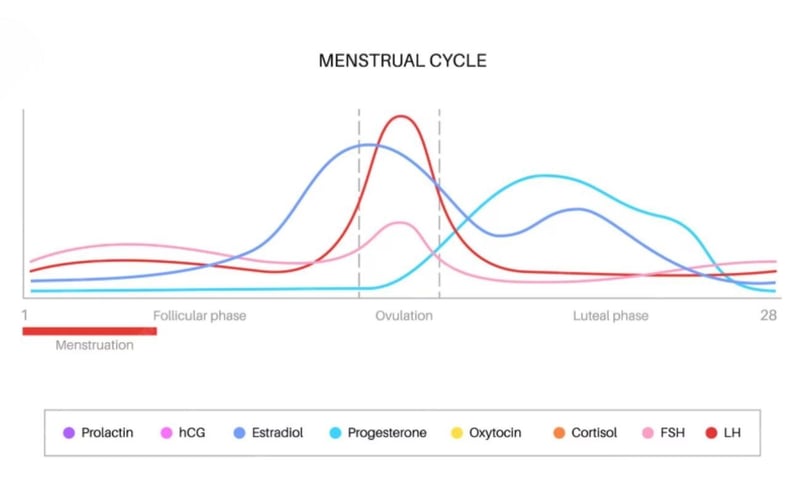
It is often these rapid changes, rather than simple deficiency, that generate symptoms.
Women vary significantly in their sensitivity to hormonal shifts, particularly to progesterone withdrawal. This helps explain why experiences range from mild premenstrual symptoms to severe mood disturbance, anxiety and sleep disruption, and why responses to oral progesterone can differ.
What Happens at Menopause?
Menopause marks the point at which ovarian hormone production declines more definitively, with a relatively abrupt reduction in oestrogen and progesterone. This contrasts with men, where testosterone generally declines more gradually over many years.
While hot flushes and night sweats are well known, the long term health implications of menopause extend much further.
Loss of sex hormones is associated with increased risk of:
-
Osteoporosis and hip fracture
-
Cardiovascular disease
-
Cognitive decline and Alzheimer’s disease
-
Colon cancer
-
Genitourinary syndrome of menopause
-
Recurrent urinary tract infections
It is important to recognise that avoiding hormone replacement therapy does not mean avoiding risk. There are risks and benefits on both sides, and decisions should always be individualised.
Hormone Replacement Therapy (HRT) and the Evidence
The Women’s Health Initiative was a large trial that studied one specific combination of animal derived oestrogen and synthetic progestin. It was stopped early and publicised in a way that emphasised relative increases in breast cancer risk, without adequately contextualising absolute risk or noting that breast cancer mortality did not increase.
This led to a dramatic decline in hormone replacement therapy prescribing worldwide. Prescribing rates are only now recovering as more balanced interpretations of the data emerge.
Modern HRT typically uses bioidentical hormones, namely estradiol and progesterone, rather than the preparations used in the original WHI study. For many women, appropriately prescribed HRT can be an important component of a menopause health strategy.
The Role of Testosterone in Women
Testosterone also declines with age in women, beginning as early as the thirties. Levels may be further suppressed by oral contraceptives. Despite this, testosterone is rarely discussed in relation to low libido, sexual pain, mood changes, energy levels or recurrent urinary infections.
Carefully dosed testosterone can be an effective treatment for low sexual desire in postmenopausal women when prescribed appropriately.
A Proactive and Personalised Approach
Perimenopause and menopause management should be proactive, personalised and holistic. In some cases, hormone replacement may involve oestrogen, progesterone and testosterone as part of a structured programme.
At OT&P in Hong Kong, menopause care is approached within a broader longevity and functional medicine framework. In a related blog, we explain how advanced hormone testing, including DUTCH testing, can help fine tune hormone replacement, lifestyle interventions and targeted supplementation to support healthy ageing.
Menopause is not simply an end point. With careful management, it can mark the beginning of a well supported and resilient next phase of life.

References
-
World Health Organization (WHO), 2022. Menopause. Available at: https://www.who.int




-2.png?length=500&name=%5BMKT%5DWebsite%20Blog%20Photo%20(22)-2.png)
